

Planning guide · updated October 2026
A vacant lot in San Luis Obispo County can look perfect from the road and still be hard or slow to build on. Whether the parcel was legally created, where the water comes from, whether the soil can take a septic system, and which fire, flood and coastal rules apply all decide what you can build and how long it takes. Most of that can be checked before you close. Here is what we look at.
The short answer
Before you buy land to build on in San Luis Obispo County, confirm that the parcel was legally created, whether it is in a city or the unincorporated County, how it gets water (a provider or a well), whether a septic system can be permitted under the County LAMP, and its fire, flood, coastal and Williamson Act status. We walk lots for free: 805-712-8993.
1. City or County
Start with who controls the lot
Lots inside the seven cities (Arroyo Grande, Atascadero, Grover Beach, Morro Bay, Paso Robles, Pismo Beach and San Luis Obispo) follow that city’s zoning and permit counter. Everything else, including Templeton, Nipomo, Los Osos, Cambria, Santa Margarita, Creston, Shandon and the rural land in between, goes to County Planning & Building. Our SLO County building permits guide explains how to tell and how each side works.
For a County parcel, the County’s LandUseView map shows the land use category and many of the overlays that matter on a lot, including the County’s rainfall data used for septic parcel sizes and the LAMP nitrogen loading areas. Look the parcel up before you write an offer, and ask the County or the city if anything on the map is unclear (we confirm per lot).
2. Legal lot status
Make sure the parcel was legally created
This is the check most buyers never hear about. The County’s Lot Legality page says plainly that to get a permit for building, grading or subdividing in California, a parcel must be legal, and the applicant has to show proof of how it was created. A parcel number on a tax bill does not prove that.
How the County decides depends on how and when the parcel was created:
| If the parcel is | Deeds the County looks at for legality |
|---|---|
| Less than 3 acres | A deed from before October 12, 1960, the date of the County’s first lot division ordinance |
| 3 acres up to 40 acres | A deed from before February 17, 1966 (Ordinance No. 834) |
| 40 acres or more | A deed from before March 4, 1972, when the Subdivision Map Act amendments took effect |
| On a recorded map | Maps recorded in 1929 or later under the state statutes of the time create legal lots; older maps do not by themselves, so the deed history is checked |
- Old maps. Lots on maps recorded before 1929 are not legal lots just because they show on the map; the County looks at the deed history instead. The County cites court decisions holding that maps recorded between 1893 and 1929 do not create legal lots.
- Sectional land. Much of the eastern county is sectional property. A quarter-quarter section or government lot is a separate legal parcel only if it was granted separately by the government or conveyed separately by a later owner.
- Deeds that merge parcels. If one deed describes your parcel together with adjacent land, the County may treat all of it as one legal parcel.
- Roads, easements and rail lines do not split a property into separate parcels. Records of survey and court partitions generally do not create legal lots on their own.
Certificates of compliance. A certificate of compliance is the County’s recorded determination that a parcel was legally created (see the Certificate of Compliance page). If it was not, the County issues a conditional certificate, and its conditions are typically the same ones the County would have applied in a land division. The County’s user guide says its policy is to act on certificates within six months of acceptance; simple ones can take as little as a month, and conditional ones three to six months to recordation. A certificate does not make a lot buildable or guarantee a permit. It only settles legality. The County also notes a certificate stays valid even if the legality rules change later.
Before you close, ask the seller for any certificate of compliance or the deed history, and have your title officer pull the preliminary title report. If legality is in doubt, that is worth sorting out (or pricing in) before the purchase, not after.
3. Zoning and what you can build
Check the land use category and the limits
The land use category or zone sets what can go on the lot: a single home, ADUs, agriculture, and how big. In the unincorporated inland County, current rules allow up to three ADUs on a lot with a house when water, sewer or septic, fire, access and drainage allow it, with exceptions in Los Osos, Cambria and on small lots served by a well. Our SLO County ADU rules guide covers the details.
Also look for anything recorded against the lot: easements, CC&Rs or a homeowners association with its own design review, and open space or agricultural contracts (see section 9). If the lot is near the ocean, check whether it is in the coastal zone; our coastal development permit guide explains what changes there.
4. Water
Where will the water come from?
Water decides more SLO County lot purchases than anything else. A lot is served either by a water provider (a city, community services district or water company) or by a well.
- Water provider. Ask the provider whether it will serve a new home on the parcel and what it needs from you (often a will-serve letter). Some districts limit new connections, so ask before you buy {CONFIRM}.
- A well. New wells are permitted by County Environmental Health. Per the Environmental Health well permit page, a C-57 licensed well driller applies for the permit on the owner’s behalf, and drilling cannot start until Environmental Health approves it. If the lot already has a well, ask for the well completion report, any pump test and water quality results. The County’s septic program requires potable water quality data less than five years old before a septic permit can be finaled.
- Small lots on a well. In the unincorporated County, ADUs are not allowed on parcels under one acre served by an individual domestic well, so a small well lot limits what you can add later.
Three groundwater areas have extra rules under the County’s Countywide Water Conservation Program:
- Paso Robles Groundwater Basin. The County’s Paso Robles Groundwater Basin page says land divisions are not allowed in the basin, non-agricultural discretionary land use permits need a 2:1 water offset, and new commercial irrigated crops need an agricultural offset clearance. It also says the 1:1 water offset for new construction expired on January 1, 2022, while well meters are still required for new structures. The County’s separate new construction water page still describes a 1:1 offset in the basin, so we confirm the current rule for each parcel (we confirm per lot). The Paso Robles Subbasin Groundwater Sustainability Plan currently exempts residential use of up to 2 acre-feet a year per property from management actions such as pumping fees and reductions.
- Nipomo Mesa Water Conservation Area. Per the County’s Nipomo Mesa Water Conservation Area page, new structures pay water offset fees so new construction is offset at a 1:1 ratio, and the new construction page says offsets are bought before the construction permit is issued. Offsets are not required for additions, replacement dwellings or expansions.
- Los Osos Groundwater Basin. Per the County’s Los Osos Groundwater Basin page, new development that uses basin water must retrofit plumbing fixtures in existing homes and businesses to save twice the water it will use, and homes need retrofit verification before sale. Check whether the lot is inside the Los Osos sewer service area/prohibition zone.
Our well and septic guide goes deeper on wells, pump tests and septic layouts in Paso Robles, Templeton and Creston.
5. Septic
Can the lot take a septic system?
Outside sewer service areas, the house needs an onsite wastewater treatment system (septic). In the unincorporated County, new systems are designed and permitted under the County’s Local Agency Management Program (LAMP), adopted by the Central Coast Water Board in 2020 and by the Board of Supervisors in 2021. What matters to a buyer:
- Percolation testing. A new system on an undeveloped lot needs a percolation test by a registered civil engineer, registered geologist or registered environmental health specialist. County approval of the results expires after one year, and clearing brush or grading for the test needs County approval first.
- Engineered design and a reserve area. Every new system is designed by a registered professional, and leach line and leach bed systems need a 100% reserve area, so the lot needs room for two dispersal fields plus the house, driveway, well setbacks and any future ADU.
- Small existing parcels. On existing parcels under 2 acres, a new system has to show seasonal high groundwater at least 25 feet below the dispersal system, a percolation rate between 5 and 120 minutes per inch and an average slope under 10% in the disposal and replacement areas. If it cannot, a supplemental treatment system may be allowed.
- Nitrogen impact areas. Parts of Los Osos, Santa Margarita, Creston, Shandon, Templeton and Paso Robles are in moderate or severe nitrogen impact areas, where new systems need supplemental treatment unless an investigation by a qualified professional supports a conventional one. Supplemental systems need an annual operating permit from the County.
- Slopes and wet years. Systems can be permitted on slopes up to 40% with a slope stability report. On some sites the County may require groundwater measurements during an average rainfall year, which can delay approval by a year or more.
If you can, make the purchase contingent on a percolation test and a preliminary septic layout. Septic is often the make-or-break item on a rural lot.
6. Fire
Fire hazard zone and access
CAL FIRE’s Office of the State Fire Marshal publishes the Fire Hazard Severity Zone maps. Zones in the State Responsibility Area (much of the rural county) took effect April 1, 2024. Maps for Local Responsibility Areas were delivered to local agencies in 2025, so for a lot in a city, check with that city for its adopted zones (we confirm per lot). The maps rate hazard, not risk, and the State Fire Marshal links a Department of Insurance notice that the maps do not affect insurance rates or availability.
The zone affects how the house is built (ignition-resistant construction and defensible space), and the lot’s road and driveway have to work for fire engines. A long, narrow or steep driveway, a gate or a dead-end private road can mean real site work. Our guide to building in a fire hazard severity zone covers the building rules and access in detail. Ask your insurance agent for a quote on the lot early, too.
7. Flood, slope and soils
Look at the ground itself
- Flood zones. Look the address up on the FEMA Flood Map Service Center. A mapped flood zone can change where and how high the house sits, and in the County it can limit how many units a lot can hold.
- Slope. A sloped lot can have the widest views and the hardest budget: retaining walls, grading permits, longer driveways and engineered foundations. Our hillside lot guide explains what to check.
- Soils and drainage. Expect a soils (geotechnical) report for the house design. Watch for drainage courses, creeks and oak trees in the building area, which can push the house or the septic field somewhere else.
8. Access and utilities
Roads, easements, power and fiber
- Legal access. Make sure the lot has recorded access to a public road, not just a dirt track across a neighbor’s land. Your title report should show any access easement and any road maintenance agreement.
- Power. Ask the utility how far the nearest line is and what a new service would involve. On rural parcels, a long line extension can be one of the largest site costs; some owners plan for solar and batteries instead.
- Gas, internet and phone. Many rural parcels have no natural gas; plan for all-electric or propane. Check internet options before you buy if you work from home.
9. Williamson Act contracts
Is the land under an agricultural contract?
Larger agricultural parcels in SLO County are often under a Williamson Act land conservation contract, which lowers property taxes in exchange for keeping the land in agricultural or compatible uses. The County’s Williamson Act page explains how they work:
- Contracts start at 10 or 20 years, depending on how close the land is to urban areas, and renew automatically each year so 10 years always remain.
- Land under contract cannot be subdivided into lots, and existing lots cannot be sold, below the minimum lot size in the contract.
- Most contracts end through non-renewal, which runs 10 years from the year it is filed, with taxes rising over that period. Cancellation needs Board of Supervisors approval, is allowed only in extraordinary circumstances, and carries a one-time penalty of 12½% of the property’s current fair market value.
- To enter a new contract, the land must be in the Agriculture land use category and meet minimum acreage (for example 20 acres for orchards and vineyards, 160 for dry farm and 320 for grazing land).
A contract does not by itself rule out a home, but it shapes what you can build and where (we confirm per lot). If the listing mentions an agricultural preserve or a contract, ask for a copy before you close.
10. Budget and timing
Price the site, not just the house
On a raw lot, the site work (well, septic, driveway, power, grading, fire water storage) can move the budget as much as the house does, and the County reviews (legality, septic, water, fire) set the early schedule. Our SLO County custom home cost guide explains what drives the cost of the house itself, and our guide on how long it takes to build a custom home covers the construction schedule. If you are still deciding whether to buy land at all, our build or buy guide lays out the trade-offs.
Before you close
12 things to check on a SLO County lot
- City or unincorporated County, and the land use category or zone.
- Proof the parcel was legally created: a certificate of compliance or the deed history.
- A preliminary title report: easements, CC&Rs, access and road agreements.
- Water: a will-serve letter, or an existing well’s completion report, pump test and water quality results.
- Groundwater area: Paso Robles Basin, Nipomo Mesa or Los Osos, and the current offset or retrofit rule.
- Sewer or septic; if septic, a percolation test and a preliminary layout with a reserve area.
- LAMP nitrogen impact area or not (supplemental treatment).
- Fire hazard severity zone, driveway and gate access, and an insurance quote.
- FEMA flood zone, creeks and drainage courses.
- Slope, soils and oak trees in the building area.
- Coastal zone, Williamson Act contract or agricultural preserve status.
- Power, gas and internet: how far, and what a new service involves.
We answer most of these on a free walk across the county, from Paso Robles, Templeton, Atascadero and Creston to San Luis Obispo, Arroyo Grande and Nipomo.
How we help
Looking at a lot with us
- Before you buy. We walk the lot, look at access, slope, the likely house and septic locations, fire and flood zones, and tell you which questions to put to the County, the seller and the water provider.
- Early numbers. We flag the site costs that matter most on that lot (well, septic, driveway, power, grading) so they are part of your budget from day one.
- Design to permit to build. Once you own the lot, we carry the project through plan check and construction.
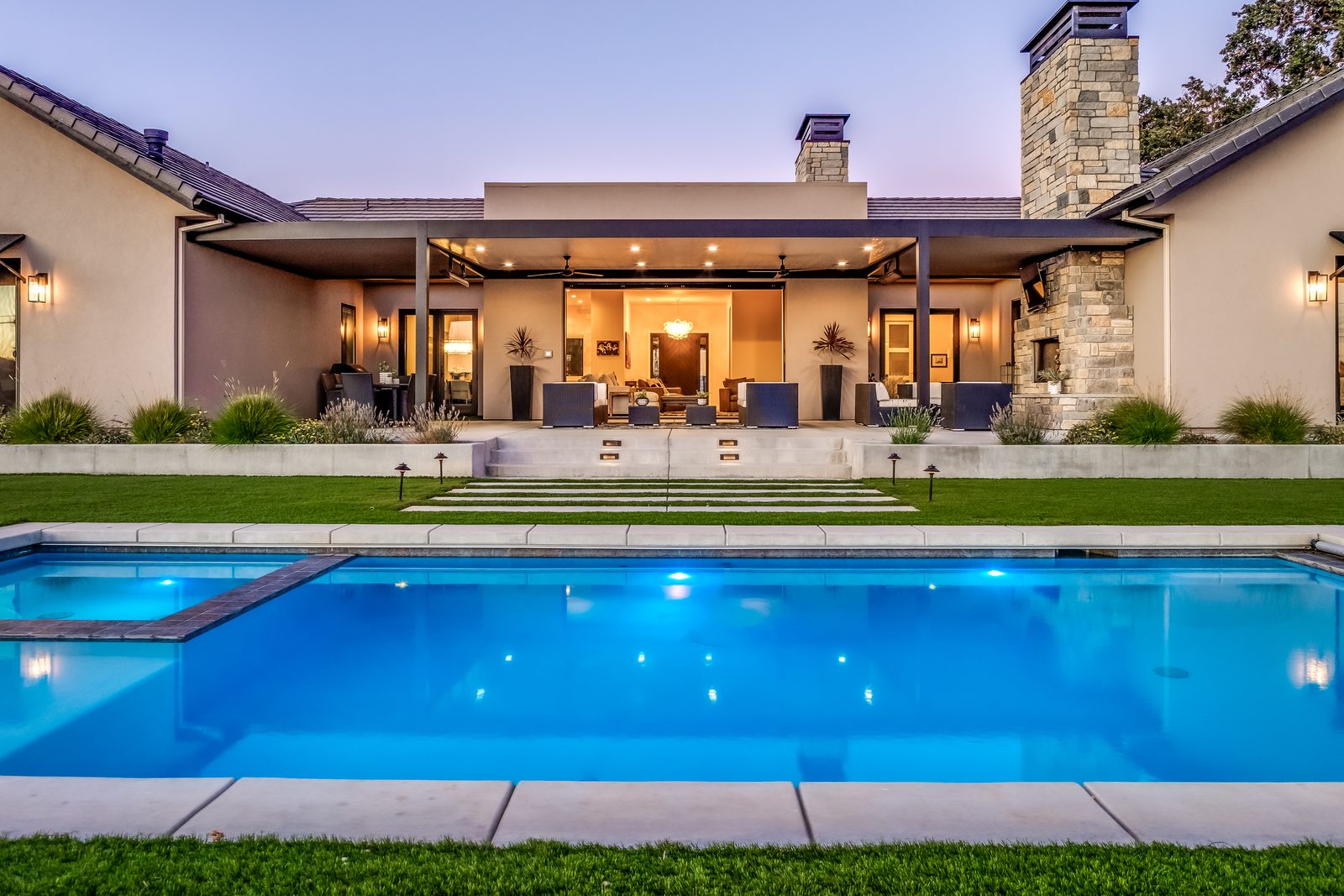
Harrod Built is a family general contractor (CSLB #986950) based in Paso Robles. We have built custom homes in Paso Robles and Templeton, including the Tuscan Revival pictured above, and we can handle everything on a new home, one stop shop: sister studio Harrod Drafting & Design draws the plans (or we build from your architect’s set or as design-build), we carry it through plan check and inspections on our process, and sister company Paso Robles Landscaping builds the landscaping, patios and outdoor spaces. More on the San Luis Obispo County hub.
Looking at a lot in SLO County? Send us the address or parcel number before you remove contingencies. We walk lots for free and look at access, slope, the likely well and septic picture, fire and flood zones and where a house would sit, so you know the big questions before you close. Call 805-712-8993 or contact us.
Sources: County of San Luis Obispo Department of Planning & Building pages on the Certificate of Compliance (and its Certificate of Compliance User Guide), Lot Legality (Parcel Legality), the Countywide Water Conservation Program, the Paso Robles Groundwater Basin, new construction water offsets, the Nipomo Mesa Water Conservation Area, the Los Osos Groundwater Basin, well meter standards, the Local Agency Management Program for onsite wastewater treatment systems (LAMP, Rev. 7/30/2020) and its FAQs (05/16/2024), Williamson Act administration and eligibility, and the Accessory Dwelling Pre-Screening Checklist; County of San Luis Obispo Environmental Health Services water well construction permitting page; CAL FIRE Office of the State Fire Marshal Fire Hazard Severity Zones page; FEMA Flood Map Service Center. All checked October 10, 2026. The County’s water pages do not all read the same on Paso Basin offsets, so we confirm the current rule for each parcel. Rules, fees and maps change. This guide is general information, not legal, real estate or tax advice. We confirm the current rules for each lot with the city or the County.

How do I know if a lot in SLO County is a legal parcel?
Ask for a recorded certificate of compliance or the deed history. The County looks at how and when the parcel was created: for parcels under 3 acres, a deed from before October 12, 1960; 3 to 40 acres, before February 17, 1966; 40 acres or more, before March 4, 1972; or a map recorded in 1929 or later. A certificate of compliance settles legality but does not make a lot buildable.
Can I build on a lot with a well and septic in SLO County?
Often, yes, but check both before you buy. A new well needs an Environmental Health permit applied for by a C-57 licensed driller, and a new septic system needs a percolation test and an engineered design under the County LAMP, with a 100% reserve area. Small parcels, shallow groundwater, slow or fast soils and nitrogen impact areas can require supplemental treatment.
Is there a water offset to build a new home in the Paso Robles Groundwater Basin?
The County’s Paso Robles Groundwater Basin page says the 1:1 offset for new construction expired January 1, 2022, though well meters are still required for new structures. Another County page still describes the offset, so confirm with the County for your parcel. Land divisions are not allowed in the basin.
What is a Williamson Act contract and can I build a house on that land?
It is a contract with the County that lowers property taxes in exchange for keeping the land in agricultural or compatible uses for 10 or 20 years, renewing each year. The land cannot be divided below the contract’s minimum lot size, and ending a contract usually takes 10 years of non-renewal. What you can build depends on the contract and County rules, so ask for a copy before closing.
How long does a certificate of compliance take in SLO County?
The County’s user guide says its policy is to act on certificates within six months of acceptance. Simple certificates can be done in about a month, and conditional certificates take three to six months from submittal to recordation.
Planning guides
Budget and planning guides
What a custom home costs on the Central Coast
Rough per-square-foot ranges for SLO, Monterey and Santa Barbara counties, and what moves a home between them.
Cost to build a custom home in SLO County
What drives the budget on a Central Coast custom home, and how to get a real number.
ADU cost on the Central Coast
Detached, attached or conversion: what moves the price of an ADU or guest house.
Home remodel cost in Paso Robles & SLO County
Kitchens, baths, whole-home remodels and additions: the cost drivers we see.
Building on a hillside lot
Soils, foundations, retaining walls, drainage and access: what a sloped lot adds before the house begins.
How long it takes to build a custom home
The phases from lot to move-in, what sets the pace, and how long our own recent homes took to build.
Building with a well and septic in North County
Wells, septic under the County LAMP, Paso basin and will-serve letters: what a rural North County lot needs before the house.
Building in a fire hazard severity zone
What Chapter 7A (and the California Wildland-Urban Interface Code) change on the roof, vents, walls, windows, decks and landscape.
Build or buy a custom home on the Central Coast
Honest comparison: custom new build vs buying an existing home in SLO, Monterey and Santa Barbara counties.
SLO County building permits: city vs county
Seven cities vs unincorporated PermitSLO, planning vs building, coastal permits and fire-zone steps.
Coastal development permits in SLO County
Cambria, Cayucos, Morro Bay, Pismo Beach and Avila Beach: exempt vs CDP vs Minor Use Permit, and Coastal Commission appeals.
Building in the Santa Lucia Preserve
Design Review Board stages, CSD water and will-serve, lot-specific fuel management and Monterey County permits.
Pebble Beach building permits
Del Monte Forest coastal permits and design approval, Pebble Beach Company ARB, protected trees, Cal Am water and fire rules.
Carmel design review: Track 1 vs Track 2
Carmel-by-the-Sea design studies: staff-level Track 1 vs Planning Commission Track 2, site assessment, story poles, trees and volume.
Montecito Board of Architectural Review (MBAR)
What MBAR reviews, conceptual vs preliminary vs final review, what to submit, floor area guidelines, fire and water steps in Montecito.
Big Sur building permits and the critical viewshed
Coastal permits, staking and flagging, the Highway 1 viewshed test, water and septic, fire access and rebuilds on the Big Sur coast.
Building in Hope Ranch: architectural review and County permits
The Association’s ABR stages, floor area, height and view rules, County design review and coastal permits, water, septic and fire access.
ADU rules in San Luis Obispo County
County vs city rules, how many ADUs a lot can have, size, setbacks, water, septic and fire checks, pre-reviewed plans and the permit path.
Rebuilding after a wildfire in SLO County
Debris removal, the County permit path and fee waivers, like-for-like and nonconforming rules, septic, Chapter 7A and insurance steps.
Building on rural acreage in North County
Access roads, wells, septic, fire rules and County permits: what to check before you build on rural North County land.
Building on a sloped lot in SLO County
County grading and drainage (Ch. 22.52), retaining walls, foundations, Chapter 7A and fire access on hillside parcels.
Expansive clay soils in Paso Robles and Templeton
What shrink-swell clay means for foundations, what City and County sources say, and what a soils report decides before you build.
Title 24 energy code for a new home
Heat pumps, solar, battery-ready panels, gas or all-electric, and what your climate zone changes.
Fixed price vs cost-plus contracts
How each contract works on a custom home and the questions to ask about allowances, changes, payments and liens before you sign.
Owner-builder vs a licensed contractor
What California’s owner-builder exemption allows, the County forms you sign and the employer duties that come with it.
Building a home in Paso Robles wine country
The house, the vines, barns and winery permits, and living beside farming on vineyard land.
Start your project
Looking at a lot in SLO County? Tell us about it.
A few details help us call you back with useful answers about budget, schedule and permits.
805.712.8993michael@harrodbuilt.com
1345 Riverside Ave, Paso Robles, CA 93446
CSLB License #986950
