

Planning guide · updated October 2026
An ADU (accessory dwelling unit) is the quickest way to add a rental, a place for family or a guest house to a lot in San Luis Obispo County, and state law makes most of them a staff-level permit. But the rules that decide how many you can build, how big, and whether the lot can serve one depend on whether you are in a city or the unincorporated County, and on water, septic and fire access. Here is how it works in 2026.

The short answer
In unincorporated San Luis Obispo County, the inland rules in effect since July 3, 2025 allow up to three ADUs on a lot with a house, each up to 1,200 square feet (a junior ADU up to 500), with 4-foot side and rear setbacks and no parking required, as long as water, sewer or septic, fire and access checks pass. Cities set their own rules. We check the lot first: 805-712-8993.
1. City or County
Who handles your ADU permit
The first question is the same as for any project: is the lot inside one of the seven cities (Arroyo Grande, Atascadero, Grover Beach, Morro Bay, Paso Robles, Pismo Beach or San Luis Obispo) or in the unincorporated County (Templeton, Nipomo, Los Osos, Cambria, Cayucos, Avila Beach, Santa Margarita, Creston, Shandon, San Miguel and the rural land in between)? Each city has its own ADU ordinance and permit counter; the unincorporated areas go to County Planning & Building. Our SLO County building permits guide explains how to tell, and how the coastal zone and fire zones stack on top.
Under all of them sits state ADU law. The California Department of Housing and Community Development (HCD) publishes an ADU Handbook (updated March 2026) that explains it. A few state rules matter most to homeowners:
- Staff-level review. An ADU that meets the objective standards is approved ministerially, without a public hearing. The agency must approve or deny a complete application within 60 days when there is already a house on the lot, and send a full list of what is missing if it denies.
- An 800-square-foot floor. Local rules on lot coverage, floor area ratio, open space, front setbacks or lot size cannot stop an 800-square-foot ADU with 4-foot side and rear setbacks that meets the other local standards.
- Height. Local agencies must allow at least 16 feet for a detached ADU (more in some cases, such as near major transit or with a multistory multifamily building) and up to 25 feet for an attached ADU, or the house’s height limit if that is lower.
- No owner-occupancy requirement for an ADU. A junior ADU that shares a bathroom with the house is different: the owner must live on site.
- Impact fees. An ADU of 750 square feet of interior living space or less is exempt from impact fees; above that, fees are charged in proportion to the main house. Building permit and plan check fees still apply.
- Fire sprinklers. Building an ADU cannot require you to add sprinklers to the existing house.
- HOAs. CC&Rs cannot prohibit or unreasonably restrict an ADU on a single-family lot, though an association can apply reasonable design standards.
2. Unincorporated County rules
What the County allows on an inland lot
On June 3, 2025, the Board of Supervisors adopted Ordinance 3536, which rewrote Title 22 Section 22.30.470 for the inland area. It took effect July 3, 2025 (see the County County announcement and its ADU page). The key rules:
- How many. Up to three ADUs per parcel with an existing or proposed house (or an SB 9 urban dwelling), in any combination of attached, detached and junior ADUs. On a multifamily parcel, up to eight detached ADUs (not more than the number of existing units) plus converted ADUs in non-living space. A parcel that uses an urban lot split is capped at four units total.
- Size. Attached, detached and converted ADUs up to 1,200 square feet; junior ADUs up to 500. Size counts living space, attics taller than six feet, basements and lofts, but not garages.
- Setbacks. A detached ADU of 800 square feet or less has no minimum front setback; a larger one follows the house’s front setback. Side and rear setbacks are 4 feet. Attached and converted ADUs follow the house’s setbacks, and an ADU rebuilt in the same place and size as a permitted structure needs no added setback.
- Height. The height the zoning allows ministerially (Section 22.10.090.C) and any community planning standards for the area.
- Parking and driveways. No parking is required for the ADU. The house’s existing parking stays unless it is demolished or converted for the ADU. The house and ADU should share a driveway where possible; the County can adjust this where sharing would mean grading on slopes over 15 percent or removing oaks or other native trees.
- Entrance. Each ADU needs its own exterior entrance. A junior ADU without its own bathroom needs an interior door to the house’s bathroom.
- Fire sprinklers. Required for an attached ADU if the house requires sprinklers, or if two or more ADUs (including junior ADUs) are attached to the house.
- Use and sale. An ADU can be rented for 30 days or more but not sold separately from the house. Rentals under 30 days are not allowed, except some approved before February 28, 2020. The ADU cannot get its certificate of occupancy before the house does.
- Guesthouse too. A lot with a house can have its ADUs and one guesthouse or home office. Under the updated Section 22.30.410, a guesthouse has no kitchen or laundry, no more than two bedrooms and one bathroom (a wet bar is allowed), is not rented as a separate unit and does not get its own electric meter.
The County’s FAQ lists the land use categories where ADUs can go: Agriculture, Commercial Retail, Office and Professional, Recreation, Rural Lands, Residential Multi-Family, Residential Rural, Residential Suburban and Residential Single-Family. ADUs are also allowed on Williamson Act land as the ordinance allows (we confirm per lot).
3. Where ADUs are limited
Los Osos, Cambria, small lots on wells and the coast
Some places in the unincorporated County are off the table or come with extra steps. Per the County’s ADU page and Pre-Screening Checklist:
- Los Osos and Cambria. ADUs are not allowed inside the Los Osos Groundwater Basin boundary or plan area, or inside the Cambria Community Services District boundary. The County notes that some water and sewer providers, such as Cambria CSD, may not be issuing new connections. More on our Los Osos and Cambria pages.
- Water board moratoria. ADUs are not allowed where the Regional Water Quality Control Board has issued a notice of resource constraints through a moratorium or other means.
- Small lots on a well. ADUs are not allowed on parcels under one acre served by an individual domestic well.
- Nipomo. Unless the lot is on community sewer, ADUs are not allowed in the Nipomo prohibition zone for new or expanded septic systems. In the Nipomo Mesa Water Conservation Area, new structures must offset their water use through conservation projects before the construction permit is issued. More on our Nipomo page.
- The coastal zone. The 2025 updates are waiting on Coastal Commission certification for the coastal zone, so the older coastal ADU rules (Title 23 Section 23.08.169) still apply there. Every coastal-zone ADU gets extra noticing, and one in the appealable area can be appealed to the Coastal Commission. Our coastal development permit guide covers that path for Cambria, Cayucos, Los Osos and Avila Beach.
City lots in Morro Bay, Pismo Beach and the other cities follow each city’s rules and maps instead (we confirm per lot).
4. The County pre-screening
Water, septic, fire, access and drainage come first
Every County ADU application includes the ADU Pre-Screening Checklist (updated November 19, 2025), a signed statement that the parcel can serve the new unit. It is the step most likely to change how many ADUs fit, so we work through it before design:
- Wastewater. On sewer, a conditional or final will-serve letter from the sewer provider (some have limited capacity). On septic, a system that meets the County’s Local Agency Management Program (LAMP), which sets minimum area per dwelling and can limit the number of units or the type of system.
- Water. Inside a water provider’s service area, a will-serve letter. Outside it, an on-site or shared well that meets the Title 19 minimum pumping capacity for each dwelling unit, with a well test under Section 19.07.040(b). Pumping capacity and a potability clearance from Environmental Health are needed before the permit is issued.
- Access. Legal access (frontage on a public road or an access easement) and physical access built to County, state or County Fire standards. Lots next to highways and railroads can have extra requirements.
- Fire. An emergency water supply (hydrant or a storage tank of the size required) and roads, driveways, gates and fences that meet fire access standards: width, surface, slope, curves, turnouts, turnarounds, clearance and vegetation. Dead-end road length is limited in some areas.
- Flood hazard. In a flood hazard area, a flood study may be needed, with flood construction standards and possibly added grading and engineering.
- Drainage. Where drainage is a known concern (slopes over 10 percent, within 100 feet of a creek bank, near bluffs, ponding areas), the County may require a drainage report and on-site retention. Review steps up with new or replaced impervious area: none at 500 square feet or less, a drainage strategy from 501 to 5,000, on-site treatment and infiltration of the 85th percentile storm from 5,001 to 20,000, and no increase in the 10-year peak flow above that.
On a rural North County lot, the well and septic pieces drive everything; see our well and septic guide. On a sloped lot, drainage and access do; see our hillside lot guide. Many lots in and around Templeton, Atascadero, Santa Margarita and Creston are also in a fire hazard severity zone, which changes how the ADU itself is built; see our guide to building in a fire hazard severity zone.
5. Pre-reviewed plans
County pre-reviewed ADU plans, and Paso Robles
The County’s Pre-Reviewed ADU Program lets owners of a single-family home build from plans the County has already reviewed. As of February 2026 there are three designs: Blueblossom, Manzanita and Sage. The plans are free, but they cannot be modified, you still go through the County permit process (faster because the plans are pre-reviewed), and you still need an engineer or architect for the site-specific pieces. You start with the County’s inquiry form, and planning staff reply by email to confirm the zoning. Under the County ordinance, an application using pre-reviewed plans is approved or denied within 30 days of being complete, not 60.
Paso Robles. The City of Paso Robles accepts the County’s plans inside city limits. Its Preapproved ADU Plans page lists the Sage (two bedrooms, one bath, 399 square feet), the Manzanita (three bedrooms, one bath, 768 square feet) and the Blueblossom (four bedrooms, two baths, 1,200 square feet). The City’s Pre-Approved ADU Checklist lists what you add for your lot: written permission from the plans’ design professional, a title page with the wildland-urban interface designation, a site plan showing setbacks and oak trees, a grading plan (more than 50 cubic yards needs a separate grading permit), a soils report or exemption, energy calculations, a sprinkler plan if the house has sprinklers, and solar as a deferred submittal. The Blueblossom has to match the house in at least four of seven ways (roof style, slope or material, siding, eaves, trim, or added articulation). Applications go through PasoPermits.com, and the City recommends a pre-submittal check-in. Paso Robles is also accepting ADU designs from design professionals for its own preapproved list. More on our Paso Robles page.
Pismo Beach runs its own pre-approved ADU plan program.
Pre-reviewed or custom? Pre-reviewed plans save design time on a flat, simple lot. A sloped lot, a tight setback, a design that should match the house, or a garage conversion usually needs custom plans. Our sister studio Harrod Drafting & Design draws custom ADU plans, and our ADU cost guide explains what moves the budget either way.
6. City of San Luis Obispo
ADU rules inside SLO city limits
The City’s rules are in Municipal Code Section 17.86.020. In summary (we confirm per lot):
- Where. ADUs are allowed in the AG, C/OS, C-N, C-C, C-R, C-D, C-T, C-S, M, R-1, R-2, R-3, R-4 and O zones on lots with an existing or proposed home.
- Size. 150 to 850 square feet for a studio or one-bedroom ADU, up to 1,000 square feet for two or more bedrooms. The director can allow up to 1,200 square feet through a director’s action; in R-1 that is only on lots of at least 12,000 square feet.
- Setbacks and height. 4-foot side and rear setbacks for a detached ADU up to 16 feet tall (18 feet with a multistory multifamily building) and for an attached ADU up to 25 feet. No setback for a converted permitted structure or a same-size rebuild in the same spot. Balconies above the first floor sit 10 feet from the property line, upper-level open space is capped at 50 square feet, and roof decks are not allowed.
- Parking and sprinklers. No added parking, and no replacement parking when a garage is converted to an ADU. Sprinklers are not required unless the house requires them.
- Fees and sewer. No new utility connection or impact fees for an ADU inside an existing structure; for others, they may apply at 750 square feet or more. ADUs in sewer-capacity-constrained areas follow the City’s wastewater flow offset rule.
- Historic properties. ADUs on listed historic properties and in historic districts follow the City’s historic preservation rules.
- Junior ADUs. Up to 500 square feet, inside the walls of the house, with a separate exterior entry and at least an efficiency kitchen. One per single-family lot. A garage converted to a junior ADU needs replacement parking.
- Process and rentals. Ministerial building permit, decided within 60 days of a complete application. No rentals under 30 days and no homestays. State-law ADU configurations are labeled on the permit (for example “ADU-66323”).
More on building inside the city on our San Luis Obispo page.
7. The permit path
From first look to final inspection
- Confirm the jurisdiction and zoning. City or County, coastal zone or inland, and the land use category or zone.
- Check the exclusions and limits. Los Osos, Cambria, small lots on a well, Nipomo septic and water rules, flood and fire zones.
- Line up utilities. Water and sewer will-serve letters, or a well test and a septic design under the LAMP.
- Pick the plan route. County pre-reviewed plans (unincorporated County, Paso Robles), a city program, or custom plans.
- Prepare the package. In the County: the Pre-Screening Checklist and a site plan with every proposed ADU, then the building permit application. In a city: that city’s application and checklist.
- Plan check. 60 days to approve or deny once the application is complete (30 days in the County with pre-reviewed plans or a manufactured home). Time you spend answering comments does not count.
- Pay fees and pull the permit. Impact fees do not apply at 750 square feet or less; permit, plan check and any utility fees vary by agency and district.
- Build, inspect and final. In the County, the ADU’s certificate of occupancy cannot come before the house’s.
Neither the County nor the cities publish a total number of months from first call to move-in, and neither do we. Our guide on how long it takes to build a custom home covers the construction side, and our financing page covers ways to pay for an ADU.
8. How we help
Planning an ADU with us
- Check the lot before you design. We confirm the jurisdiction, setbacks, water, septic or sewer, fire access and drainage on a free walk.
- Decide how many and what kind. One detached unit, a junior ADU in the house, a garage conversion, or two or three units, based on what the lot can serve.
- Price it early. Septic, wells, driveways, sprinklers and utility runs move the budget more than finishes do. See our ADU cost guide and the Central Coast custom home cost guide.
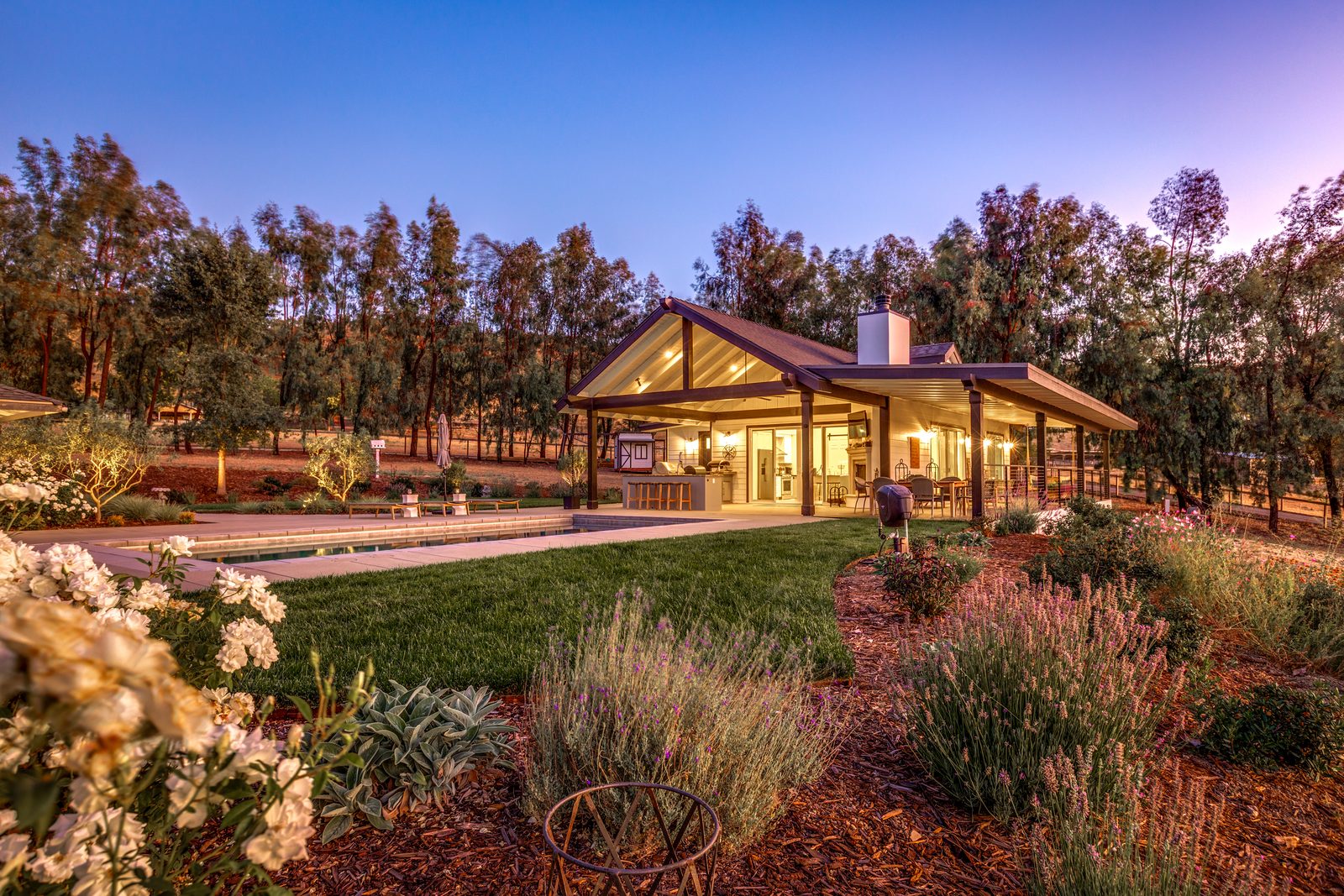
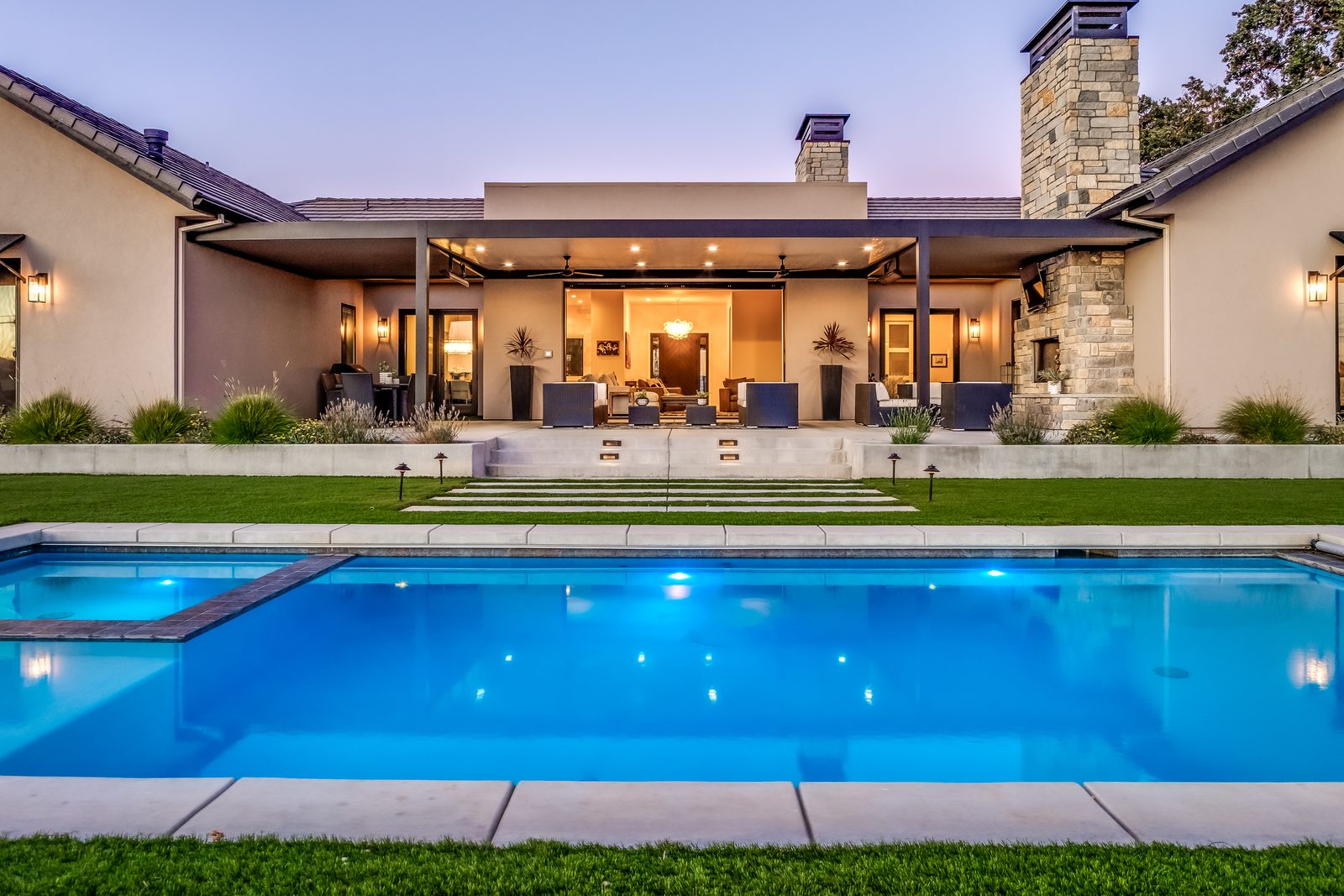
Harrod Built is a family general contractor (CSLB #986950) based in Paso Robles. We built the Modern Ranch ADU in Paso Robles pictured above, a detached three-bedroom guest house with covered porches, an outdoor kitchen and a fireplace. We can help with everything on an ADU, one stop shop: sister studio Harrod Drafting & Design draws the plans (or we build from County pre-reviewed plans or your architect’s set), we carry it through plan check and inspections on our process, and sister company Paso Robles Landscaping builds the landscaping, patios and outdoor spaces around it. More on our ADU and guest house page and the San Luis Obispo County hub.
Thinking about an ADU, a guest house or a garage conversion in SLO County? We walk the lot for free and check the jurisdiction, setbacks, water, sewer or septic, fire access and drainage before you pay for plans. Call 805-712-8993 or contact us.
Sources: County of San Luis Obispo Planning & Building ADU page and FAQs (last updated June 2025), Pre-reviewed ADUs page (design options as of February 2026), Accessory Dwelling Pre-Screening Checklist (updated November 19, 2025), Ordinance No. 3536 amending Title 22 Sections 22.30.410 and 22.30.470 (adopted June 3, 2025, inland area, in effect July 3, 2025) and the County’s June 3, 2025 announcement; City of San Luis Obispo Municipal Code Section 17.86.020; City of Paso Robles Preapproved ADU Plans page and Pre-Approved ADU Checklist; City of Pismo Beach pre-approved ADU plan program page; California Department of Housing and Community Development ADU page and ADU Handbook (March 2026), which summarizes Government Code Sections 66310 to 66342. Coastal zone rules in the unincorporated County (Title 23 Section 23.08.169) are being updated and the new version is waiting on Coastal Commission certification, so check the County page for the current status. Rules, fees and schedules change. This guide is general information, not legal advice. We confirm the current rules for each lot with the city or the County.
Before you start
A short SLO County ADU checklist
- Is the lot in a city or the unincorporated County, and is it in the coastal zone?
- Is it inside the Los Osos basin area, the Cambria CSD, or the Nipomo septic prohibition zone or water conservation area?
- Sewer or septic? If septic, does the LAMP leave room for another dwelling?
- Community water or a well? If a well, is the lot at least one acre and can the well meet the pumping capacity for each unit?
- Can the driveway and water supply meet fire access standards?
- How much new roof and paving, and does that trigger drainage review?
- Detached, attached, junior or conversion, and is the target size above or below 750 square feet?
- Pre-reviewed plans or custom plans?
- Long-term rental, family or guest use? (Rentals under 30 days are not allowed.)
We answer these on a free walk across the county, from Paso Robles, Templeton and Atascadero to San Luis Obispo, Arroyo Grande and Nipomo.

How many ADUs can I build in San Luis Obispo County?
In the unincorporated inland County, up to three ADUs on a lot with a house, in any mix of attached, detached and junior ADUs, under the rules in effect since July 3, 2025. Water, sewer or septic, fire, access and drainage can lower that number. Cities set their own limits, and the County’s coastal zone still follows its older rules.
How big can an ADU be in SLO County?
In the unincorporated inland County, up to 1,200 square feet for an attached, detached or converted ADU and 500 square feet for a junior ADU. In the City of San Luis Obispo, 850 square feet for a studio or one bedroom and 1,000 for two or more bedrooms, with up to 1,200 by exception. State law guarantees at least 800 square feet with 4-foot side and rear setbacks.
Can I build an ADU in Los Osos or Cambria?
Not in most of the unincorporated areas of those towns. The County does not allow ADUs inside the Los Osos Groundwater Basin boundary or plan area, or inside the Cambria Community Services District boundary, and Cambria CSD may not be issuing new water or sewer connections. Check the County’s exclusion map for your parcel.
Does SLO County have pre-approved ADU plans?
Yes. The County’s Pre-Reviewed ADU Program offers three free designs, Blueblossom, Manzanita and Sage, for lots with a single-family home. They cannot be modified and still need site-specific engineering and a permit, but review is faster. The City of Paso Robles also accepts these plans.
Can I use my ADU as a vacation rental?
No. In the unincorporated County and in the City of San Luis Obispo, an ADU cannot be rented for less than 30 days (the County allows some that were approved before February 28, 2020 to continue). It can be rented long term, but it cannot be sold separately from the house.
Planning guides
Budget and planning guides
What a custom home costs on the Central Coast
Rough per-square-foot ranges for SLO, Monterey and Santa Barbara counties, and what moves a home between them.
Cost to build a custom home in SLO County
What drives the budget on a Central Coast custom home, and how to get a real number.
ADU cost on the Central Coast
Detached, attached or conversion: what moves the price of an ADU or guest house.
Home remodel cost in Paso Robles & SLO County
Kitchens, baths, whole-home remodels and additions: the cost drivers we see.
Building on a hillside lot
Soils, foundations, retaining walls, drainage and access: what a sloped lot adds before the house begins.
How long it takes to build a custom home
The phases from lot to move-in, what sets the pace, and how long our own recent homes took to build.
Building with a well and septic in North County
Wells, septic under the County LAMP, Paso basin and will-serve letters: what a rural North County lot needs before the house.
Building in a fire hazard severity zone
What Chapter 7A (and the California Wildland-Urban Interface Code) change on the roof, vents, walls, windows, decks and landscape.
Build or buy a custom home on the Central Coast
Honest comparison: custom new build vs buying an existing home in SLO, Monterey and Santa Barbara counties.
SLO County building permits: city vs county
Seven cities vs unincorporated PermitSLO, planning vs building, coastal permits and fire-zone steps.
Coastal development permits in SLO County
Cambria, Cayucos, Morro Bay, Pismo Beach and Avila Beach: exempt vs CDP vs Minor Use Permit, and Coastal Commission appeals.
Building in the Santa Lucia Preserve
Design Review Board stages, CSD water and will-serve, lot-specific fuel management and Monterey County permits.
Carmel design review: Track 1 vs Track 2
Carmel-by-the-Sea design studies: staff-level Track 1 vs Planning Commission Track 2, site assessment, story poles, trees and volume.
Montecito Board of Architectural Review (MBAR)
What MBAR reviews, conceptual vs preliminary vs final review, what to submit, floor area guidelines, fire and water steps in Montecito.
Big Sur building permits and the critical viewshed
Coastal permits, staking and flagging, the Highway 1 viewshed test, water and septic, fire access and rebuilds on the Big Sur coast.
Building in Hope Ranch: architectural review and County permits
The Association’s ABR stages, floor area, height and view rules, County design review and coastal permits, water, septic and fire access.
Buying land to build on in SLO County
Legal lot status, zoning, water, wells, septic, fire, flood, Williamson Act contracts and access: what to check before you close.
Building on rural acreage in North County
Access roads, wells, septic, fire rules and County permits: what to check before you build on rural North County land.
Garage conversion vs detached ADU
Setbacks, parking, size, utilities, energy code and fire rules for converting a garage versus building a new detached ADU.
Adding a second story in SLO County
Height limits, structure, fire sprinklers, energy code, septic and coastal rules to check before you build up.
Title 24 energy code for a new home
Heat pumps, solar, battery-ready panels, gas or all-electric, and what your climate zone changes.
ADU rules in Monterey County
Inland vs coastal zone rules, size caps by area, Cal Am water permits, septic, guesthouses and the County permit path.
ADU rules in Santa Barbara County
Unincorporated County lots: the two ADU paths, size and height, Montecito and coastal permits, water, septic, fire and where state law wins.
Owner-builder vs a licensed contractor
What California’s owner-builder exemption allows, the County forms you sign and the employer duties that come with it.
Building or remodeling in Cambria
Water service and wait lists first, then small-lot size limits, Monterey pines, coastal permits and fire.
Room additions in SLO County
Where a single-story addition fits: setbacks, septic and wells, slope, fire and energy rules, and permits.
Building in Los Osos
Sewer service, water will-serve and retrofit rules, growth allocations, habitat plan coverage and coastal permits.
ADU rules in the City of Paso Robles
Permit paths, size, setback, parking and design rules, junior ADUs, pre-approved plans and the City checklist.
Building a house in Nipomo
County permits, NCSD will-serve letters, Nipomo Mesa water offsets, sewer or septic and drainage.
Start your project
Planning an ADU in SLO County? Tell us about your lot.
A few details help us call you back with useful answers about budget, schedule and permits.
805.712.8993michael@harrodbuilt.com
1345 Riverside Ave, Paso Robles, CA 93446
CSLB License #986950
