

Planning guide · updated October 2026
What actually moves the price of a custom home in Paso Robles, Templeton, San Luis Obispo and the rest of the county, from the lot to the light fixtures, and how to get a number you can bank on.
Harrod Built builds custom homes, remodels and ADUs across San Luis Obispo County and the rest of the Central Coast, and we price each one from the actual plans and lot. For a written number on your project, call 805-712-8993 or send the form at the end of this page.
The short answer
Rough cost per square foot in 2026
These are Michael Harrod’s rough ranges for building a custom home with us in 2026. The price per square foot depends on what the home is:
| Type of home | Rough cost per sq ft |
|---|---|
| Custom home | $300–$400/sf and up, depending on the home |
| Higher-end custom Taller ceilings, stone, gated-community homes | About $500–$600/sf |
| Very high end | $600+/sf and up, with no real upper limit |
Hillside lots add a premium. A sloped lot usually adds cost for a well and septic, grading, engineered foundations and access. How much depends entirely on the site, so we price it after we walk the lot.
More detail in our guide to building on a hillside lot.
This is a rough range, not a quote. Every home is site- and design-specific, so your number can land above or below these ranges. For a real figure, call 805-712-8993 or request an estimate. The first site visit is free.
Building elsewhere on the Central Coast? See what a custom home costs on the Central Coast, covering San Luis Obispo, Monterey and Santa Barbara counties.
Two homes with the same floor plan can land far apart in San Luis Obispo County. One sits on a flat lot in Paso Robles with city water and sewer at the street. The other is on an oak-covered hillside outside Templeton with a long driveway, a new well, a septic system and a fire-zone build. Same house, very different job.
Use the ranges above as a starting point. The rest of this guide walks through the parts of a custom home budget, what pushes each one up or down here, and the questions to ask before you commit to a lot or a design.
1. The site
Site work and utilities
Slope, access and grading
Flat, open lots are the least expensive to build on. Hillsides bring soils reports, engineered foundations, retaining walls, drainage and a driveway that concrete trucks can climb. Tight access means smaller deliveries and more labor hours.
Soils
Expansive clay is common in North County. It can call for deeper footings, a post-tensioned slab or over-excavation and fill. A soils report early in design keeps this from surprising you later.
Water and sewer
Inside a city or community services district you pay connection and capacity fees and run lines to the street. On rural parcels you budget for a well (drilling, pump, storage tank and treatment if needed) and a septic system designed around percolation tests. Either way it is a real line item.
Power and trenching
Long runs from the utility pole, transformer upgrades and trenching across a big parcel add up. Some rural owners add solar and batteries at the same time.
2. Permits and fees
Permits, plan check and impact fees
Inside one of the county’s seven cities, the city handles permits; everywhere else it is San Luis Obispo County Planning & Building through the PermitSLO portal. Budget for plan check and permit fees, school fees, and impact fees for things like roads, parks and fire service. The amounts vary by jurisdiction and by house size, so we pull the current schedule for your parcel during estimating.
Coastal lots in Cambria, Cayucos, Morro Bay, Avila Beach or Pismo Beach often need a coastal development permit, which adds design time, reports and sometimes hearings. Parcels in a mapped fire hazard severity zone (check the CAL FIRE Fire Hazard Severity Zone maps) are built to the wildfire chapter of the code, which affects roofing, siding, vents, windows and decking.
3. Design and engineering
Plans, engineering and reports
Plan on house plans, structural engineering, energy compliance under the California energy code (Title 24), and the reports your site calls for: soils, survey, septic design, and sometimes biology, archaeology or arborist reports for oaks. Our design studio, Harrod Drafting & Design, can draw the house, which keeps design and construction pricing in one conversation.
4. The house itself
Size, shape and finishes
- Size and shape. A simple footprint with a straightforward roof costs less per square foot than a house with many corners, roof planes and tall walls.
- Structure. Large openings, steel beams, vaulted or beamed ceilings and walls of glass add engineering and labor.
- Finishes and selections. Cabinets, counters, tile, flooring, windows, doors, plumbing fixtures, lighting and appliances are where two otherwise-identical homes split the most. We set allowances with you up front and track them as you choose.
- Systems. Heat pumps, radiant floors, whole-house fans, fire sprinklers (required in new California homes), smart-home wiring and generators each carry their own cost.
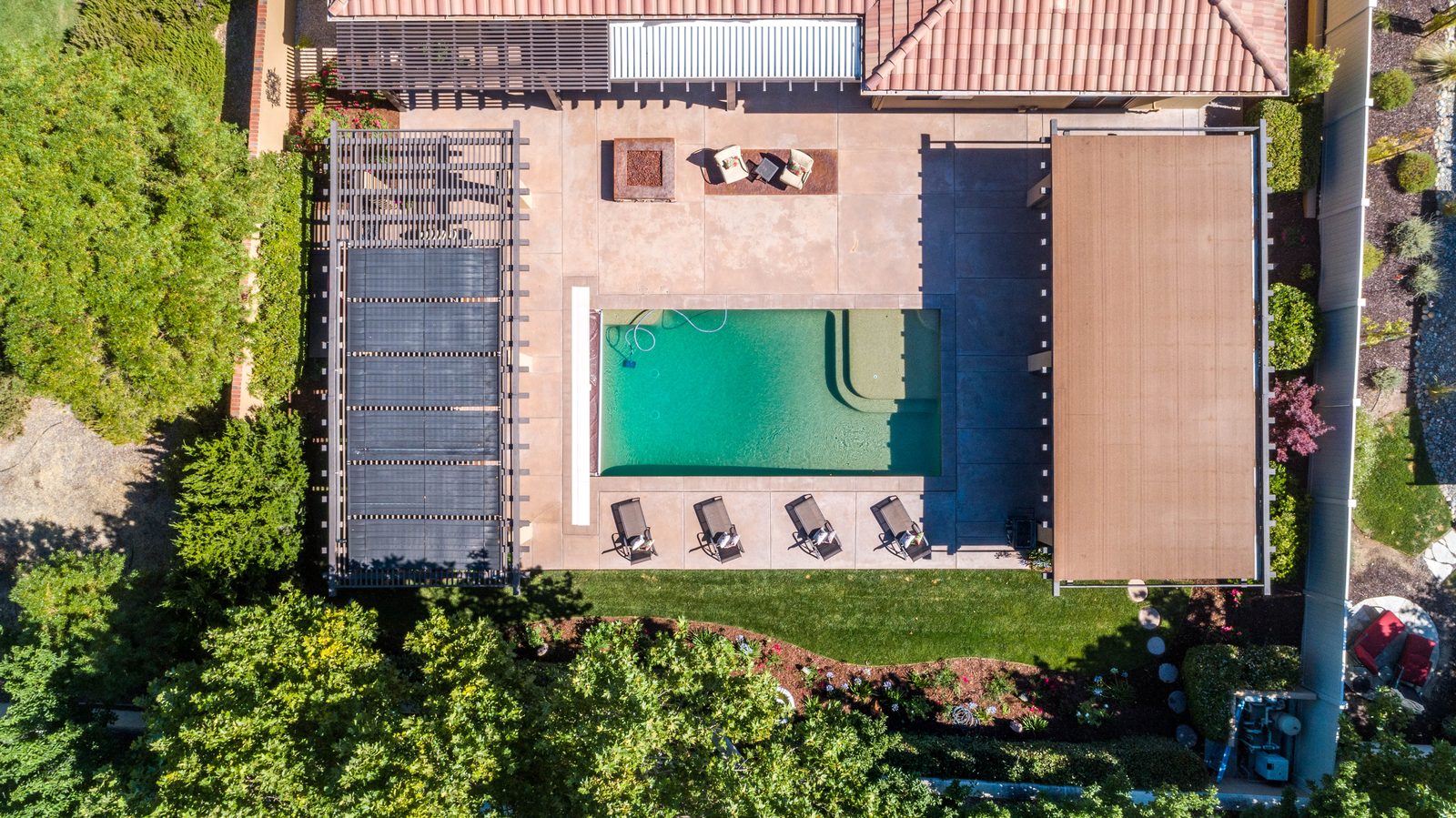
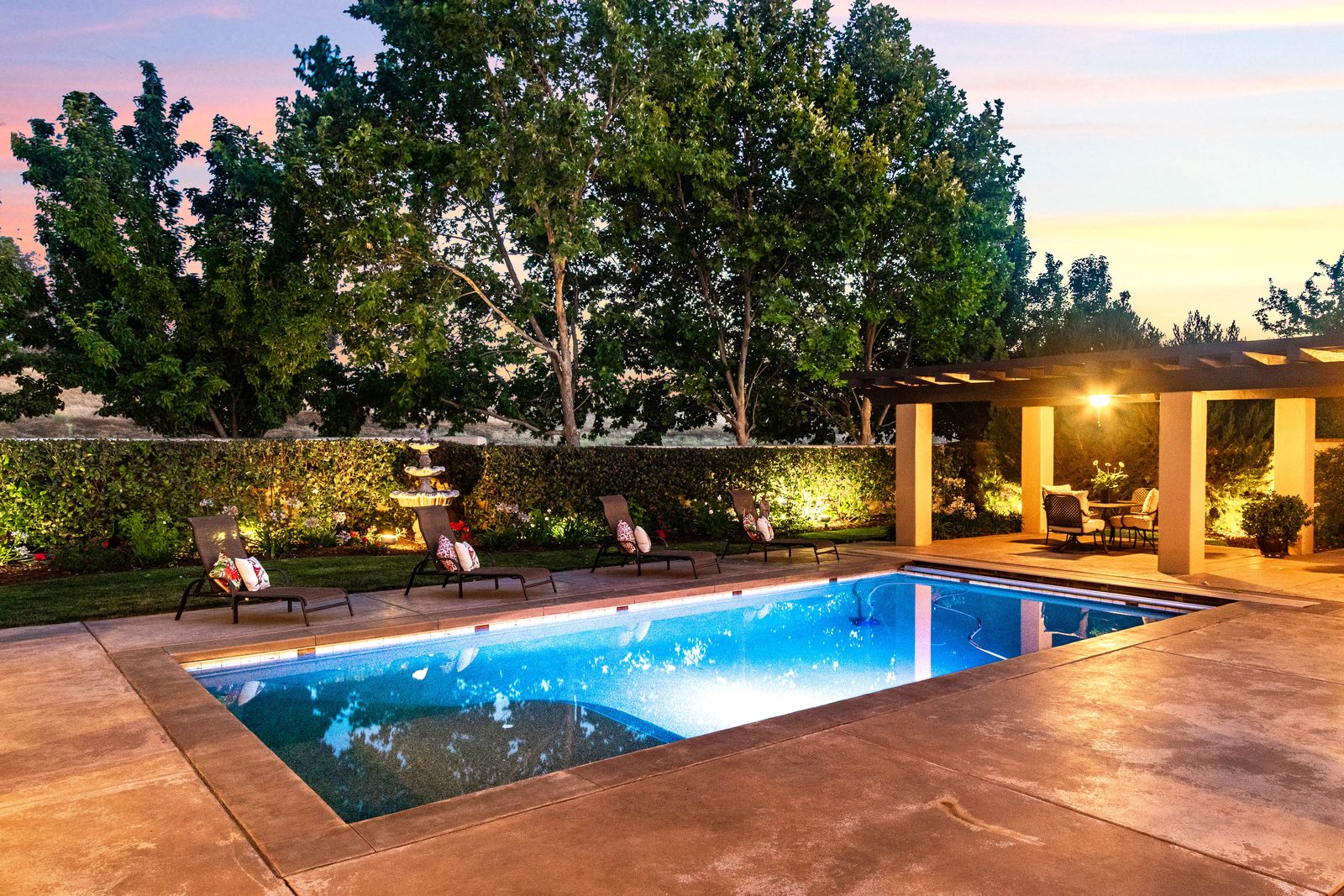
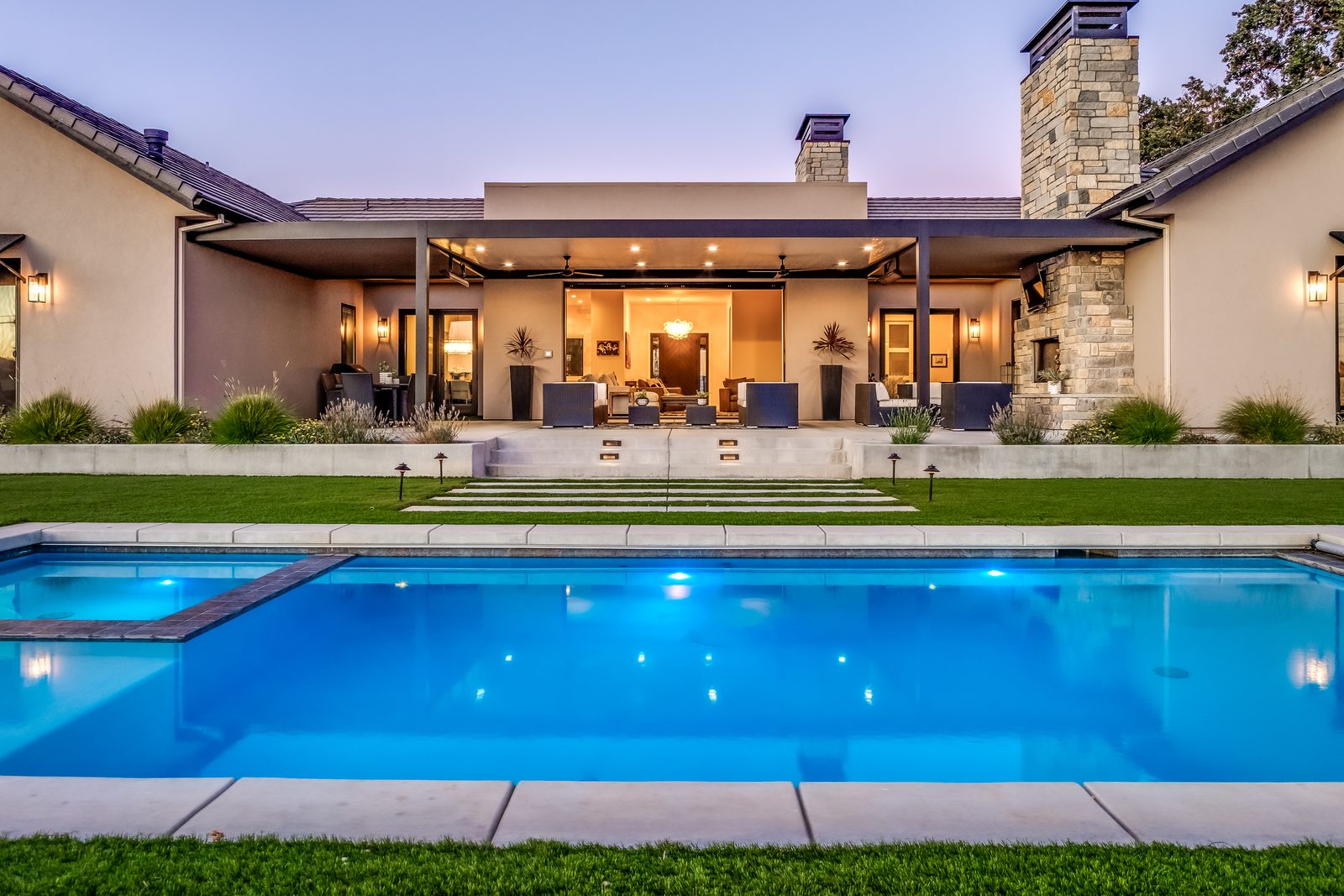
- Outdoor living. Pools, covered patios, outdoor kitchens, fire features and landscaping are often a large share of a Central Coast budget. Many of our homes include them.
5. Time
How long it takes, and why it matters to the budget
Design and permits usually take longer than construction planning, especially on coastal or hillside lots. Construction on our own recent homes in the county ran from 9 months (the Tuscan Revival and the Spanish / Santa Barbara Style home, both in Paso Robles) to 14 months (the Modern French Country in Templeton and the Contemporary in Morro Bay). A longer schedule means more months of construction loan interest, insurance and rent, so it belongs in your budget too.
More detail in our guide to how long it takes to build a custom home.
Getting a real number
How we price a custom home
- Free lot walk. We look at access, slope, utilities, fire zone and the likely permit path, ideally before you buy.
- Budget conversation. We talk through size, style and finish level and flag the site items that will matter most.
- Plans and written estimate. Once there are plans, we price the job line by line with allowances for the selections you haven’t made yet.
- Contingency. Every custom home should carry one for the things nobody can see until the ground is open.
Want to see what finished homes look like? Browse our projects, or read about how a job runs.

How much does it cost to build a custom home in San Luis Obispo County?
As a rough range, about $300–$400 per square foot and up for a custom home, more like $500–$600 per square foot for higher-end homes with taller ceilings, stone or a gated-community setting, and $600+ per square foot for very high-end homes, with no real upper limit. Hillside lots add a premium that varies by site. It’s a rough range, not a quote: every home is site- and design-specific. Call 805-712-8993 or request an estimate for a real number.
Do hillside lots cost more to build on?
Usually, yes. Hillside lots add a premium for a well and septic, grading, engineered foundations and access. How much varies by site, so we price it after a free lot walk.
What costs do people forget?
Site work, utility connections or a well and septic, permit and impact fees, engineering and reports, fire-zone construction, landscaping, and the carrying costs of a longer schedule.
Is it cheaper to build in the city or in the County?
Neither is automatically cheaper. City lots usually have utilities at the street but may carry higher connection fees; rural County lots often need a well, septic and longer utility runs.
How long does it take to build a custom home here?
Design and permits come first and vary the most. Construction on our recent homes in the county ran 9 to 14 months.
Can you help me budget before I buy a lot?
Yes. We walk the lot for free and tell you which site items are likely to drive the cost.
Where we build
Custom homes across the Central Coast
See our San Luis Obispo County page, or go straight to Paso Robles, Templeton, Atascadero, San Luis Obispo, Arroyo Grande, Pismo Beach, Morro Bay, Cambria and Nipomo. We also build in Monterey County and Santa Barbara County.
Cost by town
Custom home cost in other towns
Same rough ranges, different local costs: permits, fees, water, trees and site work change from town to town.
Planning guides
Budget and planning guides
What a custom home costs on the Central Coast
Rough per-square-foot ranges for SLO, Monterey and Santa Barbara counties, and what moves a home between them.
ADU cost on the Central Coast
Detached, attached or conversion: what moves the price of an ADU or guest house.
Home remodel cost in Paso Robles & SLO County
Kitchens, baths, whole-home remodels and additions: the cost drivers we see.
Building on a hillside lot
Soils, foundations, retaining walls, drainage and access: what a sloped lot adds before the house begins.
How long it takes to build a custom home
The phases from lot to move-in, what sets the pace, and how long our own recent homes took to build.
Building with a well and septic in North County
Wells, septic under the County LAMP, Paso basin and will-serve letters: what a rural North County lot needs before the house.
Building in a fire hazard severity zone
What Chapter 7A (and the California Wildland-Urban Interface Code) change on the roof, vents, walls, windows, decks and landscape.
Build or buy a custom home on the Central Coast
Honest comparison: custom new build vs buying an existing home in SLO, Monterey and Santa Barbara counties.
SLO County building permits: city vs county
Seven cities vs unincorporated PermitSLO, planning vs building, coastal permits and fire-zone steps.
Coastal development permits in SLO County
Cambria, Cayucos, Morro Bay, Pismo Beach and Avila Beach: exempt vs CDP vs Minor Use Permit, and Coastal Commission appeals.
Building in the Santa Lucia Preserve
Design Review Board stages, CSD water and will-serve, lot-specific fuel management and Monterey County permits.
Carmel design review: Track 1 vs Track 2
Carmel-by-the-Sea design studies: staff-level Track 1 vs Planning Commission Track 2, site assessment, story poles, trees and volume.
Montecito Board of Architectural Review (MBAR)
What MBAR reviews, conceptual vs preliminary vs final review, what to submit, floor area guidelines, fire and water steps in Montecito.
Big Sur building permits and the critical viewshed
Coastal permits, staking and flagging, the Highway 1 viewshed test, water and septic, fire access and rebuilds on the Big Sur coast.
Building in Hope Ranch: architectural review and County permits
The Association’s ABR stages, floor area, height and view rules, County design review and coastal permits, water, septic and fire access.
ADU rules in San Luis Obispo County
County vs city rules, how many ADUs a lot can have, size, setbacks, water, septic and fire checks, pre-reviewed plans and the permit path.
Buying land to build on in SLO County
Legal lot status, zoning, water, wells, septic, fire, flood, Williamson Act contracts and access: what to check before you close.
Rebuilding after a wildfire in SLO County
Debris removal, the County permit path and fee waivers, like-for-like and nonconforming rules, septic, Chapter 7A and insurance steps.
Building on rural acreage in North County
Access roads, wells, septic, fire rules and County permits: what to check before you build on rural North County land.
Fixed price vs cost-plus contracts
How each contract works on a custom home and the questions to ask about allowances, changes, payments and liens before you sign.
Start your project
Planning a custom home? Get a written estimate.
A few details help us call you back with useful answers about budget, schedule and permits.
805.712.8993michael@harrodbuilt.com
1345 Riverside Ave, Paso Robles, CA 93446
CSLB License #986950
