

Planning guide · updated October 2026
A house on vineyard land around Paso Robles sits inside a working landscape. The ground next door may be farmed day and night at harvest, your own acreage may hold vines now or later, and a barn, a guest house or one day a small winery can share the site with the home. That changes the questions to ask before you design. This guide is about the farm side of a wine country property: which rules cover the house and which cover the vines, what living beside agriculture involves, where to put the home, and what to know before planting. For the ground-level basics of a rural lot, such as wells, septic and access, see our guides on building on rural acreage and the well and septic guide. Call 805-712-8993 with questions about a property.
The short answer
Building a home in Paso Robles wine country means planning for two things on one parcel: a house, which follows the usual construction permit path through San Luis Obispo County or the City of Paso Robles, and agriculture, which follows its own rules. The Right to Farm Ordinance protects normal farming next door, the County’s Agricultural Offset rules govern new irrigated planting in the Paso basin, barns can sometimes be built as agricultural exempt buildings, and a winery or tasting room needs a discretionary use permit. Settle where each piece will go before the house is designed. Call 805-712-8993.
1. The map on the label
What “Paso Robles wine country” does and doesn’t decide
“Paso Robles” on a wine label refers to a federal American Viticultural Area, or AVA, administered by the Alcohol and Tobacco Tax and Trade Bureau. The federal regulation describes its boundary inside San Luis Obispo County, and a 2014 final rule established eleven smaller AVAs within it: Adelaida District, Creston District, El Pomar District, Paso Robles Estrella District, Paso Robles Geneseo District, Paso Robles Highlands District, Paso Robles Willow Creek District, San Juan Creek, San Miguel District, Santa Margarita Ranch and Templeton Gap District. TTB keeps the full list of established AVAs.
An AVA tells a buyer where the grapes were grown. It is not a zoning district and does not change what you may build. Building rules come from whoever has jurisdiction over the parcel: the City of Paso Robles inside city limits, and San Luis Obispo County everywhere else, which takes in much of the vineyard land. The County’s land use category for the parcel, such as Agriculture or Rural Lands, is what shapes the house, the outbuildings and any farm uses. Our city vs County permit guide explains how to tell which department you are dealing with.
Much of the AVA’s vineyard land is in communities we work in, from Adelaida and the west side and Templeton to Creston, San Miguel, Shandon and Santa Margarita.
2. The house and the farm
One parcel, several sets of rules
On a vineyard or ranch property, each thing you might build answers to a different part of the code. Sorting them out early keeps a future barn, winery or event lawn from being boxed in by where the house went.
| On the property | Which rules it falls under | Who you deal with |
|---|---|---|
| The main house | A construction permit, plus the County’s land use rules for the parcel’s land use category. Inside city limits, the city’s own codes. | County Planning & Building, or the City of Paso Robles Building Division. |
| A guest house or ADU | The same construction permit path as the house, with the County’s accessory dwelling standards on top. | County Planning & Building. |
| Planting vines | Usually no land use permit to plant a crop, but new or expanded irrigated planting in the Paso basin goes through the County’s Agricultural Offset rules, and clearing or grading can need its own permit. | County Planning & Building (offset clearance or exemption). |
| A barn or equipment building | May qualify as an agricultural exempt building if it meets every County criterion; otherwise a regular permit. | County Planning & Building, filed through PermitSLO. |
| A winery | Agricultural processing: a discretionary Minor Use Permit, with neighbor notice, site and design standards. | County Planning & Building, with a hearing officer. |
| A tasting room | Allowed only as a smaller, incidental part of a permitted winery, under its own Minor Use Permit. | County Planning & Building. |
| Weddings, concerts and other events | A separate land use permit, scaled to the number and size of events. | County Planning & Building, sometimes the Planning Commission. |
A simplified map of unincorporated San Luis Obispo County rules, from the County pages listed under Sources. Your parcel’s land use category and location decide the details; we confirm per lot.
Two points from the County are worth knowing. First, approval of a land use permit covers the use only; the buildings still need construction permits, and earthwork may need a grading permit (see the County’s land use permit types). Second, a winery is treated as agricultural processing. Its application describes the equipment and the steps proposed to keep dust, odor and noise from leaving the site, and neighbors are notified before it is filed. Wineries with public tasting or events sit farther back from property lines and neighboring homes than production-only wineries. If a winery might come later, we leave room for it, and for its access and parking, in the first site plan.
3. Living beside agriculture
What the Right to Farm Ordinance means for a new home
San Luis Obispo County’s Right to Farm Ordinance recognizes the right to farm within the law and limits nuisance claims against established, commercial farming that follows accepted local practice. When a home in the unincorporated County is sold, the seller gives the buyer a written Right to Farm disclosure, and the same statement goes on discretionary land use permit applications.
The County’s Right to Farm information sheet is plain about what neighbors of a farm can expect: noise, dust, light, odors, fumes and insects; machinery, pumps and fans; night lighting and night harvesting; farm crews, trucks and slow equipment on the road, at any hour and on any day of the year. It also notes that an open field today may be planted with vines in the future, and that in most cases no permit is needed to plant a crop. The Agriculture Department publishes accepted standards for bird frightening devices such as propane cannons, and its wind machine standards are advisory, because wind machines are currently exempt from County noise standards.
Pesticides and notice
Pesticides are not allowed to drift onto neighboring property, and all agricultural pesticide use is reported to the County Agriculture Department. In most cases, though, farms are not required to notify neighbors in advance. Restricted pesticides require a permit from the Department (see its pesticide use page). California’s SprayDays service lets anyone sign up by address for an email or text before a scheduled application of a California restricted material on a nearby farm. Concerns about a specific application go to the Agriculture Department, ideally while it is happening.
None of this is a reason to avoid wine country. It is a reason to know your neighbors’ operations before you design, and to place bedrooms, patios and the pool with them in mind.
4. Siting the house
Where the home goes on a vineyard property
The County’s Agriculture Element asks that new buildings and roads be placed to protect farmland: on a small part of the site, on the least productive ground, and with roads that do not cut through fields. Its agricultural buffer policies let the Agricultural Commissioner recommend a buffer when a land division or land use permit is reviewed. A buffer is measured from the occupied structure to the edge of the farmed area, and it can still hold landscaping, barns, storage buildings, orchards or pasture. Vineyards fall in the group with the larger recommended distances, and the final figure depends on the site: slope, prevailing wind and differences in elevation.
A single home on a building permit may never go through that review, but the same thinking makes a better home. On the vineyard properties we look at, we work through these questions with the owner:
- Which ground is worth farming? Keep the house, driveway and yard off the blocks with the soil, slope and exposure that grow the fruit.
- Where does the wind come from? Put outdoor living and bedrooms upwind of the rows and the equipment yard where you can.
- How does farm traffic move? Tractors, sprayers and harvest trucks need turnarounds and avenues at the row ends. A separate guest drive keeps them apart from family and visitors.
- What does the neighbor grow? A vineyard, an orchard and grazing land each bring different noise, dust and seasons.
- Where could farm buildings go? Leave space for a barn, a crush pad or a future winery, sized for the setbacks those uses carry.
- Where does construction stage? On a planted site we keep trucks, spoils and materials out of the rows and away from drip lines and trellis anchors.
Slope, soils and oak trees still matter in the usual way; our expansive clay soils guide covers the foundation side, and the fire hazard zone guide covers building on a parcel in a mapped fire hazard zone.
5. Water for the vines
Planting new vines in the Paso basin
The vines and the house usually draw on the same groundwater. Most of the area sits over the Paso Robles Area Subbasin, which is managed under California’s Sustainable Groundwater Management Act by four local agencies: the County, the City of Paso Robles, San Miguel Community Services District and the Shandon-San Juan agency. The County’s groundwater sustainability page has the plan, the annual reports and a parcel map. As of October 2026, the State Water Board does not list the Paso Robles subbasin among the basins it has placed on probation.
Planting is where the County’s rules bite. Under its Agricultural Offset requirements, new or expanded irrigated crop production in the basin needs an Agricultural Offset clearance or exemption from Planning & Building. The County’s page describes three cases:
- The land was irrigated recently. If irrigated crops were grown on the site within the five years before you apply, it can be replanted in the same crop and acreage with an exemption. A new or larger planting needs an on-site offset showing it uses no more water than what was there.
- No recent irrigation, outside the Area of Severe Decline. A one-time exemption allows a small new planting.
- No recent irrigation, inside the Area of Severe Decline. The current ordinance offers no path to new or expanded irrigated crops.
The County has extended these requirements to January 1, 2028, and has been working on a new planting ordinance for the basin, so check the current rules on its Paso Robles Groundwater Basin programs page before you buy land with a vineyard in mind. Land divisions are not allowed in the basin, and new structures still need a well meter. The household well, its permit and the septic system are covered in our well and septic guide.
6. Barns and farm buildings
Agricultural exempt buildings, and what they can’t become
San Luis Obispo County lets certain farm buildings go without a building permit as an agricultural exempt building, filed through PermitSLO with a site plan and a floor plan. The exemption application lists every condition, and all of them have to be met. In short, the building:
- houses farm equipment, hay, grain, livestock or crops, and is not lived in, used to process or pack farm products, or open to the public;
- is in the Agriculture or Rural Lands land use category, outside urban and village reserve lines, on a property of at least 20 acres;
- sits at least 100 feet from adjoining property lines and public roads and at least 50 feet from other buildings;
- stays within the County’s floor area limit, at one story with an open storage loft;
- has no insulation, heating or cooling unless a stored crop needs it, no plumbing beyond hose bibbs or a wash sink, no French doors or other features that make it readily habitable, and only the lighting and wiring farm use needs.
Electrical, plumbing and mechanical work still need their own permits, and so can grading. The County Land Use Ordinance (section 22.30.060) adds that a building approved as an agricultural structure cannot be used as a residence without a land use permit for residential use and a construction permit, and if it was built as exempt, the construction permit covers the whole building. So a “barn now, guest house later” plan does not save a step. If a building might one day hold a guest suite, an office, a tasting room or events, we design and permit it for that use from the start.
Winery buildings in the Agriculture and Rural Lands categories follow design standards of their own under section 22.30.070: an agricultural or residential look rather than an industrial one, non-reflective siding and roofing, screening from public roads, and shielded lighting that does not shine upward. Those standards suit the house too, and drawing the whole property in one design language is part of the work of our design studio, Harrod Drafting & Design.
7. Agricultural contracts
Vineyard land under the Williamson Act
Many vineyard and grazing parcels around Paso Robles are under a Williamson Act land conservation contract. Under the County’s Williamson Act program, the owner gets a property tax reduction in exchange for a ten- or twenty-year agreement not to develop or convert the land, and contracts renew each year. The main limit the County names is on dividing the land into parcels smaller than the contract minimum; ending a contract is most often done through non-renewal, which takes years to run out. A contract does not automatically rule out a home, but it shapes what can be built and where, so we confirm per lot. Our guide on buying land to build on explains what to check on a contracted parcel before you close.
8. Designing for wine country
A house that works with the land around it
The homes we build in North County share a few habits, and a vineyard setting sharpens them:
- Shade and outdoor rooms. Hot afternoons and cool evenings call for deep covered porches and patios, with the long glass and outdoor living facing the view across the rows and shaded from the late sun.
- Keeping dust outside. A mudroom or boot room at the farm entry, good door seals, and a mechanical system with filtration help on a property where tractors and dirt roads are part of daily life.
- Room for guests. Harvest brings family and friends. A detached guest house or ADU gives them their own space; see our pages on guest houses and ADUs and ADU rules in SLO County.
- Workspace. An equipment garage or shop near the farm drive, separate from the family garage, keeps machinery away from the front door.
- Energy and fire. California’s energy code applies to the house as it does in town (our Title 24 guide), and if the parcel is in a mapped fire hazard severity zone, the house needs ignition-resistant construction and defensible space (fire hazard zone guide).
- Outdoor kitchens and landscape. Patios, an outdoor kitchen and planting that frames the vines are handled by our landscape company, Paso Robles Landscaping.
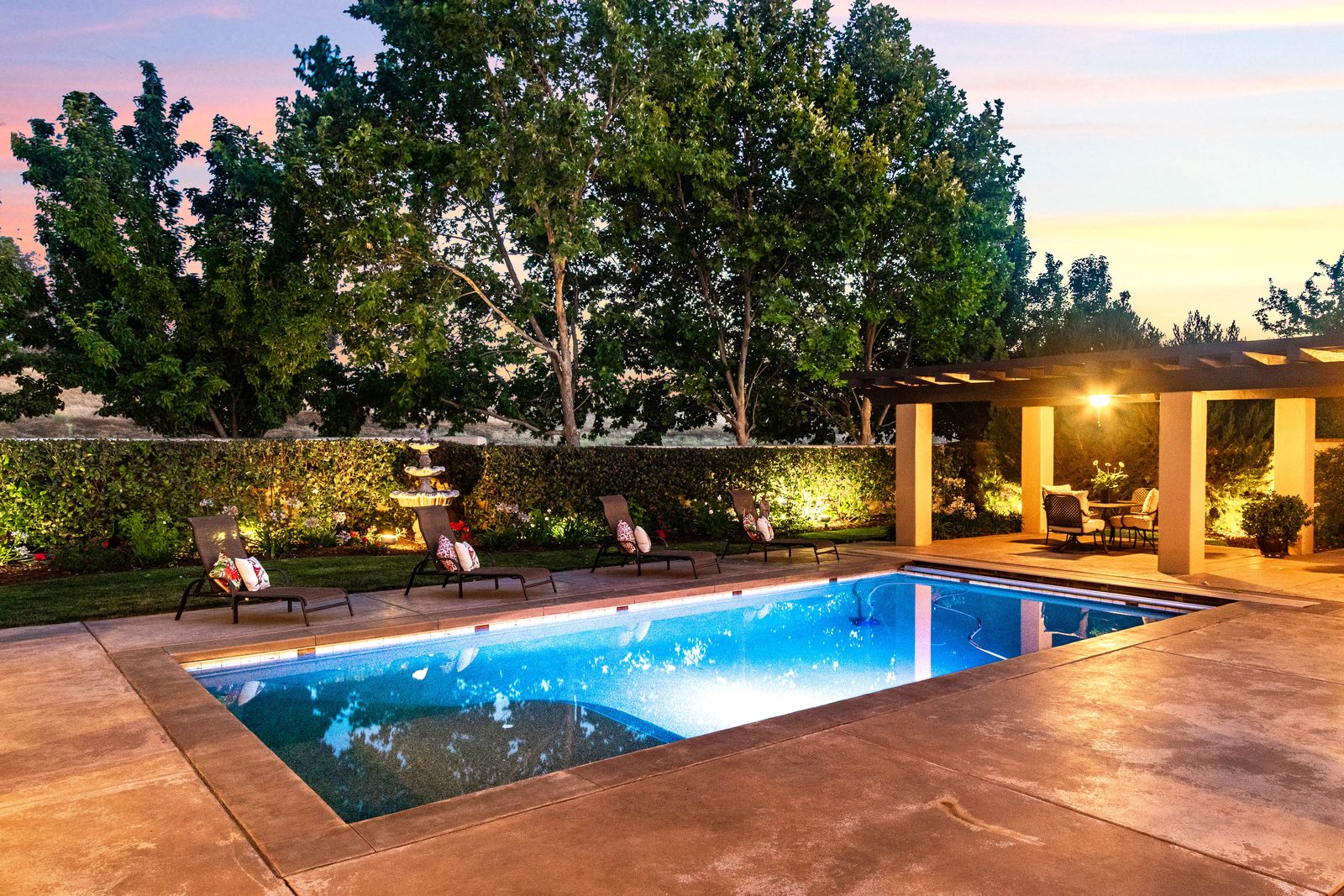
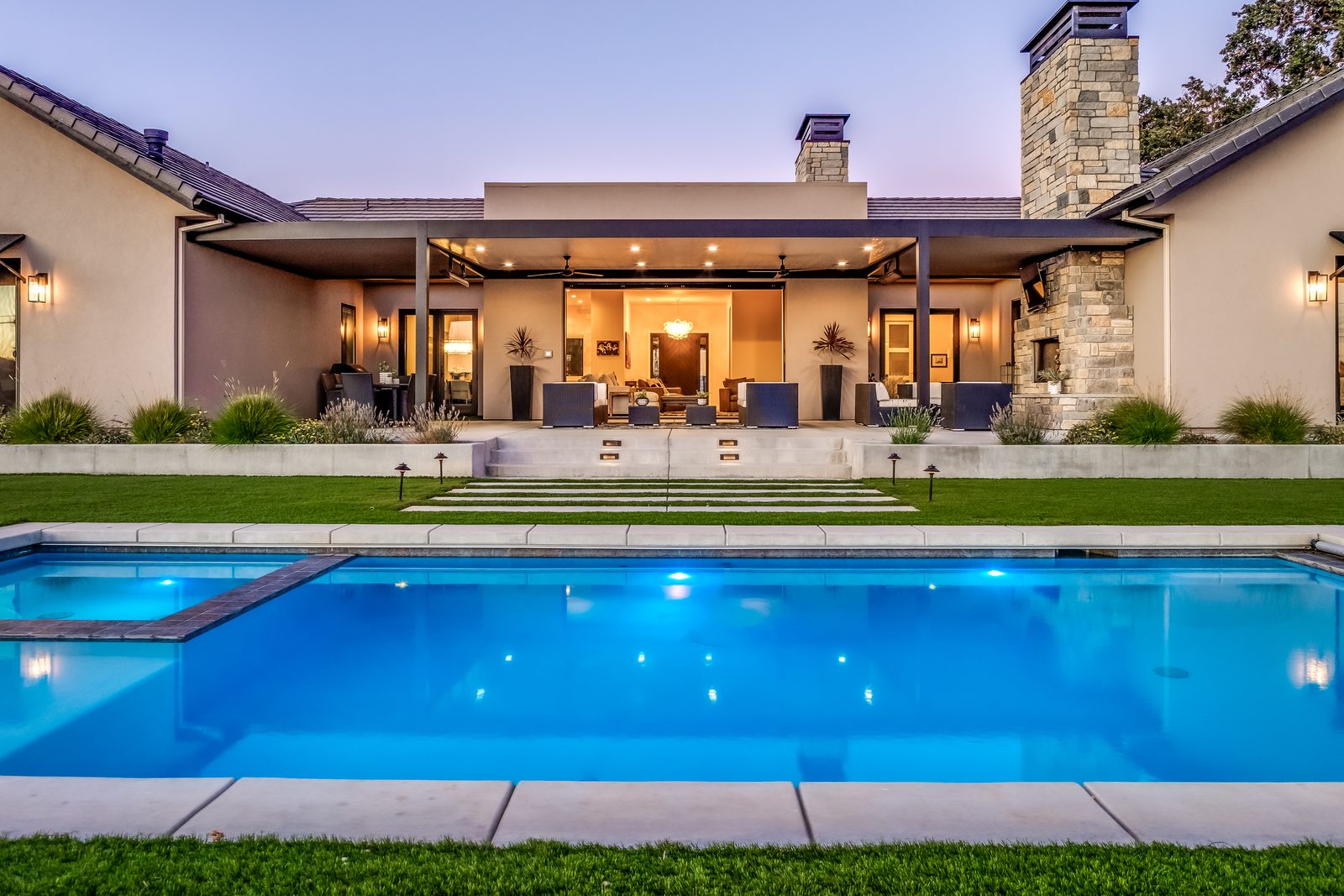
Our Tuscan Revival home in Paso Robles, with its covered patios, pergola and pool, is one example of how we treat indoor-outdoor living in North County.
9. Before you buy or design
Ten questions for a wine country property
- Is the parcel in the City of Paso Robles or the unincorporated County, and what is its land use category?
- Is it under a Williamson Act contract, and what does the contract allow?
- Has it been irrigated in the last five years, and is it inside the Area of Severe Decline?
- Do you plan to plant new vines, and does the Agricultural Offset path allow it?
- What do the neighbors farm, and which way does the wind usually blow?
- Which ground is most worth farming, and which is better for the house and yard?
- Where will farm traffic, harvest trucks and guests come in?
- Will you want a barn, a shop, a guest house, a winery or events later, and where would each go?
- Which buildings could qualify as agricultural exempt, and which need full permits for their future use?
- Have the well, septic, access and fire questions in our rural guides been answered for this parcel?
How we help
Wine country homes with Harrod Built
- A walk of the land first. Harrod Built is a family general contractor based in Paso Robles, CSLB #986950. We walk vineyard and ranch properties with owners before anything is drawn and talk through the house, the farm and the future. You can look us up on the CSLB license check.
- One plan for the whole site. Harrod Drafting & Design draws the house, guest house and outbuildings together, so the site plan leaves room for what comes later.
- Permits sorted early. We work out which pieces go through a construction permit, an agricultural exemption or a use permit, and in what order, with the County or the City of Paso Robles Building Division.
- Outdoors too. Paso Robles Landscaping handles the patios, outdoor kitchens and landscape that tie the house to the vineyard.
See our page on custom homes in Paso Robles, read how we run a build, or learn about our design-build approach. We also build across San Luis Obispo, Monterey and Santa Barbara counties, with most of our wine country work around Paso Robles.
Looking at vineyard or ranch land? We can walk the property with you, talk through where a house, a barn and any future farm buildings could go, and flag the County questions to answer before you design. Call 805-712-8993 or contact us.
Sources: Alcohol and Tobacco Tax and Trade Bureau (TTB) list of established American Viticultural Areas and final rule T.D. TTB-125; 27 CFR 9.84; County of San Luis Obispo Department of Agriculture / Weights and Measures: Right to Farm Ordinance (County Code Title 5), Right to Farm information sheet, Agricultural Resources and pesticide use pages; California Department of Pesticide Regulation SprayDays; County of San Luis Obispo Department of Planning & Building: General Plan Agriculture Element and its agricultural buffer policies, agricultural exempt building page and exemption application, land use permit page, Williamson Act administration, Paso Robles Groundwater Basin and Agricultural Offset pages, and Land Use Ordinance sections 22.30.060 and 22.30.070; County of San Luis Obispo groundwater sustainability page for the Paso Robles basin; State Water Resources Control Board groundwater basins page; City of Paso Robles Building Division. All checked October 19, 2026. This guide is general information, not legal, agricultural or code advice; the County, the city and the agencies named above have the final word on any property.

Do I need a permit to plant a vineyard near Paso Robles?
Usually not a land use permit for the planting itself; the County notes that in most cases no permit is needed to plant a crop. In the Paso Robles Groundwater Basin, though, new or expanded irrigated crop production needs an Agricultural Offset clearance or exemption from County Planning & Building, and clearing or grading the land can need its own permit. Check the current rules for your parcel before you plant.
Can I build a house on vineyard land in San Luis Obispo County?
Generally yes, on a legal parcel, through the normal construction permit process. The parcel’s land use category, any Williamson Act contract, the well and septic, and fire and access rules shape what can be built and where. We confirm per lot.
Can I build a barn without a building permit in SLO County?
Some farm buildings qualify as agricultural exempt buildings if they meet every County criterion, including a property of at least 20 acres in the Agriculture or Rural Lands category, set distances from property lines and other buildings, a floor area limit, and no living, processing or public use. Electrical and plumbing still need permits, and a barn cannot later be lived in without a land use permit and a construction permit.
What is the Right to Farm disclosure?
It is a written statement the County’s Right to Farm Ordinance requires when a home in the unincorporated County is sold, and on discretionary land use permit applications. It tells buyers that normal farming nearby, with its noise, dust, odors, equipment and night work, is protected when it follows accepted practice.
Can I add a winery or tasting room to my property later?
Possibly. In the unincorporated County a winery is agricultural processing and needs a Minor Use Permit, and a tasting room is allowed only as a smaller, incidental part of a permitted winery. Public tasting and events bring larger setbacks and access requirements, so if a winery might come later, plan room for it in the first site plan.
Planning guides
Budget and planning guides
Building on rural acreage in North County
Legal access, wells, soils, fire and siting on a large North County parcel.
Building with a well and septic
Well permits, the basin rules for a household well, and septic design under the County program.
Buying land to build on in SLO County
What to check on a parcel before you close, including agricultural contracts.
Building in a fire hazard severity zone
Ignition-resistant construction, defensible space and access on rural sites.
Expansive clay soils in Paso Robles and Templeton
Why North County soils shape the foundation, and what the soils report decides.
Custom home cost in Paso Robles
The site, design and finish choices that drive a Paso Robles home budget.
ADU rules in San Luis Obispo County
Guest houses and second units on County land, and how the rules apply.
Title 24 energy code for a new home
California’s energy rules for a new house, from insulation to solar.
How long it takes to build a custom home
Lot, design, permits and construction, in order.
Building a custom home in the Santa Ynez Valley
Ranch and ag land, Williamson Act home sites, the design overlay, oaks, creeks, water, septic and fire access.
Start your project
Building on vineyard or ranch land? Tell us about it.
A few details help us call you back with useful answers about budget, schedule and permits.
805.712.8993michael@harrodbuilt.com
1345 Riverside Ave, Paso Robles, CA 93446
CSLB License #986950
