

Planning guide · updated October 2026
Most of the oak hills and ranch land around Paso Robles, Templeton and Creston has no water or sewer main in the street. Here is what a private well and a septic system add to a custom home, and which County and district pages to check before you buy.
The short answer
On a rural North County lot, plan on a private well permitted through County Environmental Health and a septic system designed to the County’s Local Agency Management Program (LAMP), with percolation testing and an engineered design. Inside Templeton CSD or the City of Paso Robles you may connect to district or city water and sewer instead. We confirm which path applies on a free lot walk before design.
1. City lot or country parcel?
The first fork in the road
In Paso Robles city limits, most lots connect to City water and sewer and pay City connection and impact fees (see the City’s City of Paso Robles Development Fees and City water and wastewater fee schedule). Outside the city, including much of west Paso, east-side ranch land, Templeton outside the district, Creston, and other unincorporated North County, there is usually no main in the street. Permits for the house run through San Luis Obispo County Planning & Building and the PermitSLO portal; the well and the septic each have their own review.
In Templeton, lots inside the Templeton Community Services District Engineering (TCSD) service area can get water and sewer from the district after a will-serve letter. Lots outside the district usually need a well and septic, the same as Creston and rural Paso.
2. The well
County well construction permits
A new drinking-water well in San Luis Obispo County needs a construction permit from County Environmental Health. The County’s County Environmental Health well construction permitting page says the owner hires a C-57 licensed well driller; the driller submits the permit application and fee, and drilling cannot start until Environmental Health approves it. After construction, the driller files a Well Completion Report and Environmental Health issues a final approval letter. The County also posts well driller resources with map tools for proposed well sites.
Budget for the drill, the casing, the pump, a storage tank, any treatment the water quality needs, and (on many rural lots) enough stored water for fire sprinklers and firefighting. Exact scope depends on depth, yield and water quality at the site; we do not publish a number because it varies lot to lot.
3. The Paso Robles Groundwater Basin
What the basin page still requires
Much of North County sits over the Paso Robles Groundwater Basin. The County’s Paso Robles Groundwater Basin program page summarizes the Countywide Water Conservation Program rules that apply there. As of the County’s own page, the 1:1 water-offset requirement for new construction in the Paso Basin area expired on January 1, 2022; well meters are still required for new structures. Agricultural and planting-offset rules for irrigated crops are a separate track and can affect well permits when a site is also used for farming. We pull the current basin status for your parcel at the start of estimating.
4. The septic system
LAMP, percolation tests and engineered design
New and replacement onsite wastewater systems in unincorporated San Luis Obispo County are governed by the County’s Local Agency Management Program for septic systems (also summarized on the County’s Local Agency Management Program (LAMP) page). The LAMP FAQs note that the LAMP was adopted by the Central Coast Regional Water Quality Control Board and by the County Board of Supervisors, and that every proposed system must be designed by a registered professional.
Typical steps before the house is framed:
- Percolation / soils testing by a registered civil engineer, registered geologist or registered environmental health specialist.
- Engineered septic design sized to the bedroom count and the soils, with setbacks from wells, structures and property lines.
- County Planning & Building review and inspection, including a pre-backfill inspection.
- Supplemental / non-conventional systems when soils or groundwater require more treatment; those need an annual operating permit per the LAMP FAQs.
We do not invent wait times or system costs here. The soils and the bedroom count drive both, so the number comes from your design and the County review.
5. Will-serve as the alternative
When the district or City can serve the lot
If the lot is inside TCSD, ask for a will-serve letter early. The district’s Templeton Community Services District Engineering page covers water and sewer engineering and impact fees for new connections, and it posts how many water units remain available. Inside Paso Robles city limits, the City’s fee pages list water and wastewater connection charges for a new single-family home. Either path replaces a private well and septic; neither is automatically cheaper once you add lines, meters and fees, so we compare both on the lot walk.
6. What else the rural lot usually needs
Access, power, fire and the house
- Driveway and fire access. Engines and concrete trucks need a way in. Mapped fire hazard severity zones (check the CAL FIRE Fire Hazard Severity Zone maps) also shape driveway grade, width and turnarounds.
- Power. A long run from the nearest pole, a transformer upgrade and trenching across a big parcel are common rural line items.
- Fire-zone construction. Oak hills around Paso, Templeton and Creston are often mapped. See our guide to building in a fire hazard severity zone.
- Hillside work. Sloped parcels add soils reports, foundations and retaining walls; see building on a hillside lot.
- Plans. Our design studio, Harrod Drafting & Design, can draw a house that fits the well setbacks, the septic field and the building envelope.
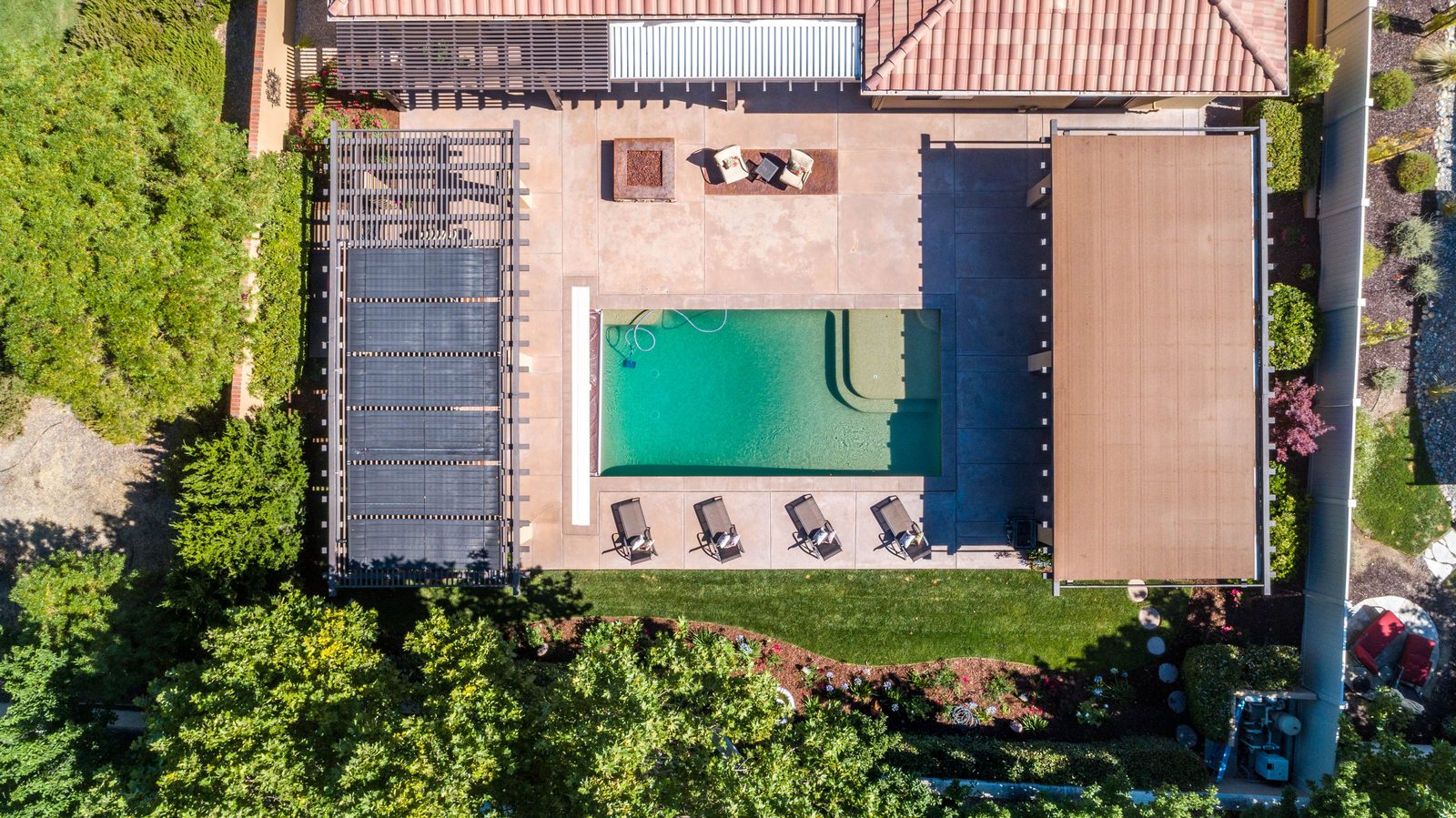
- Yard and outdoor living. Our sister company, Paso Robles Landscaping, builds landscaping, pools and outdoor living once the well and septic locations are set, so the yard is planned with the utilities, not against them.
Every site is different. The fastest way to know what your lot needs is a free site walk. Call 805-712-8993 or contact us.
Before you buy
North County well-and-septic checklist
- Is the lot in a city or CSD service area, or truly rural?
- If rural, has a well been drilled and approved, or will you need a new County well permit?
- Do percolation tests and a septic design pencil out for the bedroom count you want?
- Is the parcel in the Paso Robles Groundwater Basin, and what does the County page currently require for new structures?
- Can a fire engine and a concrete truck reach the building pad?
- Which agency issues the building permit: City of Paso Robles, or County Planning & Building via PermitSLO?
We walk North County lots for free and talk through all six while you can still walk away.



Do I need a well and septic to build in Paso Robles?
Inside city limits, most lots connect to City water and sewer. Outside city limits on rural parcels, a private well and a County-reviewed septic system are the usual path. We confirm which applies on the first lot walk.
Who permits a new well in San Luis Obispo County?
County Environmental Health. A C-57 licensed driller submits the well construction permit; drilling cannot start until the County approves it, and a Well Completion Report is filed when the well is done.
What is the County LAMP?
The Local Agency Management Program sets the minimum standards for onsite wastewater (septic) systems in unincorporated San Luis Obispo County. New systems need percolation testing and an engineered design reviewed by County Planning & Building.
Does Templeton always need a well and septic?
No. Lots inside the Templeton Community Services District can connect to district water and sewer after a will-serve letter. Lots outside the district usually need a well and septic.
Will you look at a rural lot before I buy it?
Yes, and it is free. We walk it with you and talk through water, septic or sewer, access, fire zone and the likely permit path.
Planning guides
Budget and planning guides
What a custom home costs on the Central Coast
Rough per-square-foot ranges for SLO, Monterey and Santa Barbara counties, and what moves a home between them.
Cost to build a custom home in SLO County
What drives the budget on a Central Coast custom home, and how to get a real number.
ADU cost on the Central Coast
Detached, attached or conversion: what moves the price of an ADU or guest house.
Home remodel cost in Paso Robles & SLO County
Kitchens, baths, whole-home remodels and additions: the cost drivers we see.
Building on a hillside lot
Grading, foundations, access and drainage: what a sloped lot adds before the house starts.
How long it takes to build a custom home
Design, permits and construction, with the real build times from our own homes.
Building on a hillside lot
Soils, foundations, retaining walls, drainage and access: what a sloped lot adds before the house begins.
How long it takes to build a custom home
The phases from lot to move-in, what sets the pace, and how long our own recent homes took to build.
Building in a fire hazard severity zone
What Chapter 7A (and the California Wildland-Urban Interface Code) change on the roof, vents, walls, windows, decks and landscape.
Build or buy a custom home on the Central Coast
Honest comparison: custom new build vs buying an existing home in SLO, Monterey and Santa Barbara counties.
SLO County building permits: city vs county
Seven cities vs unincorporated PermitSLO, planning vs building, coastal permits and fire-zone steps.
Coastal development permits in SLO County
Cambria, Cayucos, Morro Bay, Pismo Beach and Avila Beach: exempt vs CDP vs Minor Use Permit, and Coastal Commission appeals.
Start your project
Building on a rural North County lot? Tell us about it.
A few details help us call you back with useful answers about budget, schedule and permits.
805.712.8993michael@harrodbuilt.com
1345 Riverside Ave, Paso Robles, CA 93446
CSLB License #986950