

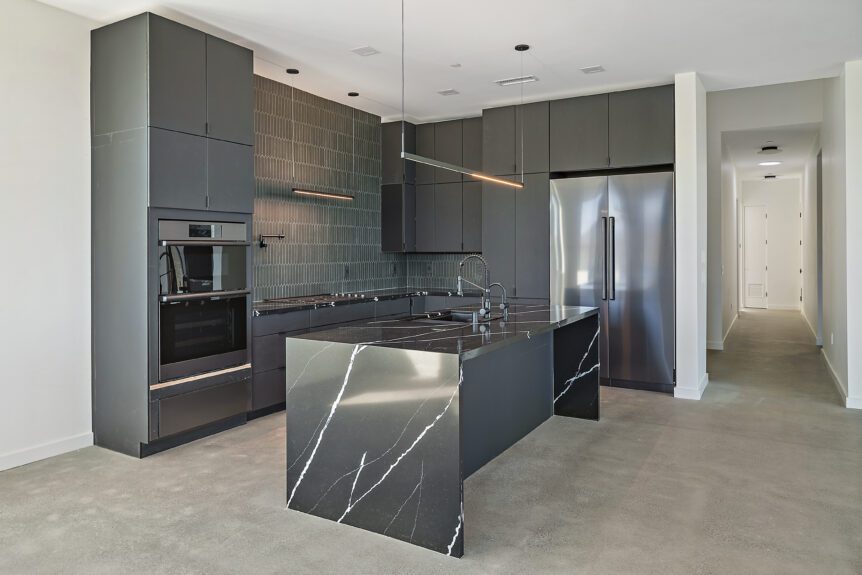
Building a custom home on California’s Central Coast is one of the most significant investments you will ever make. The land, the views, the craftsmanship — every decision matters. But among the choices that will define your home for decades to come, few carry more long-term weight than the smart home technology you wire in from day one.
Today’s most discerning buyers in San Luis Obispo County, Paso Robles, Atascadero, Templeton, and Pismo Beach expect more than beautiful architecture. They expect homes that think, adapt, protect, and perform. A smart home thoughtfully integrated during construction doesn’t just make daily life more comfortable — it commands a measurable premium at resale, lowers operating costs, and positions your property as forward-thinking in an increasingly competitive luxury market.
At Harrod Built, we’ve spent years refining how we integrate smart technology into custom homes across San Luis Obispo County. This guide reflects what we’ve learned — about what genuinely adds value, what buyers actually use, and what the California luxury market rewards.
What Is a Smart Home?
A smart home uses connected devices, automation systems, and AI-powered controls to manage lighting, climate, security, energy, and entertainment from a single interface — or automatically, without user input. When integrated during new construction, smart systems cost significantly less to install and perform far better than retrofitted alternatives. For luxury custom homes on the Central Coast, smart home integration is no longer a premium upgrade. It is a baseline expectation.
Why Smart Home Integration Belongs in New Construction — Not a Renovation
The single most important principle in smart home technology: the best time to build it in is before the walls go up.
Retrofitting a finished home with whole-home automation, structured wiring, or in-wall speakers requires tearing into drywall, rerouting electrical, and working around finished surfaces. The cost multiplies. The performance suffers. The aesthetic compromises accumulate.
During new construction, your Harrod Built team can route low-voltage wiring, install conduit, plan network infrastructure, and position sensors with zero visible intrusion. The result is a home that looks and feels as refined as it performs.
- Structured wiring installed during framing: 40–60% less expensive than retrofit
- In-wall speaker channels: essentially free to rough-in during construction
- Whole-home network infrastructure: cleanest to install pre-drywall
- Smart HVAC zoning: requires ductwork decisions made early in the build
- EV charging conduit: a fraction of the cost when run before the slab is poured
The 13 Smart Home Features That Add the Most Value in 2026
Not every smart gadget is worth building in. The following features consistently deliver measurable ROI, improve daily quality of life, and resonate with luxury buyers across California’s Central Coast market.
1. Whole-Home Automation Platform
The foundation of every smart home is its control platform. Systems like Control4, Crestron, Savant, or Lutron connect lighting, climate, security, audio, video, shading, and irrigation into one unified interface.
For luxury buyers, controlling every system from a single app, a touchscreen panel, or a voice command is not a novelty — it is an expectation. A well-integrated automation platform typically adds 3–5% to appraised home value in the luxury segment, and is one of the first questions sophisticated buyers ask during a showing.
- Recommended systems: Control4, Crestron Home, Savant, Josh.ai
- Install tip: dedicate a network closet with structured wiring panel during framing
- Central Coast note: vacation rentals in Pismo Beach and Avila Beach command significantly higher nightly rates with documented smart home features
2. Smart Lighting & Automated Shading
Lighting is the most emotionally powerful element of any interior. Smart lighting systems — paired with motorized shading — allow homeowners to create scenes, schedule routines, and reduce energy consumption by up to 30% compared to conventional switching.
On the Central Coast, where natural light and coastal glare are defining environmental factors, automated solar shading is particularly valuable. Lutron Palladiom, Hunter Douglas PowerView, and Somfy systems protect furnishings from UV degradation while maintaining the views that drew you to the land in the first place.
- Energy benefit: LED + smart dimming reduces lighting energy use by up to 75%
- Lifestyle benefit: Circadian lighting routines support sleep quality and wellbeing
3. Smart HVAC & Indoor Climate Zoning
California’s Central Coast presents a unique climate challenge: cool marine-layer mornings, warm afternoons, and evening fog — often varying dramatically from hilltop to valley floor within the same parcel. Smart HVAC zoning allows each area of the home to maintain its ideal temperature independently.
Beyond comfort, smart HVAC systems align with California Title 24 energy compliance requirements and can lower heating and cooling costs by 20–30% annually. For homes in Paso Robles or Templeton wine country, where summer temperatures regularly exceed 95°F, that is a meaningful operational advantage.
- Pair with: ERV (Energy Recovery Ventilation) for superior indoor air quality
- Pre-wire for heat pump integration in anticipation of California’s evolving building codes
4. Indoor Air Quality Monitoring
Luxury home buyers — particularly families building forever homes in San Luis Obispo County — increasingly ask about VOC monitoring, particulate filtration, CO₂ tracking, and humidity control. Systems like Airthings or integrated Daikin/Mitsubishi HVAC air quality controls monitor and respond to air quality in real time.
On the Central Coast, this feature has particular resonance given regional wildfire smoke events affecting areas from Atascadero to Arroyo Grande.
- Key metrics to monitor: PM2.5, CO₂, VOCs, radon, humidity
- Integration: link air quality data to automated HVAC ventilation response
5. Comprehensive Smart Security Systems
Security technology for luxury custom homes has evolved far beyond motion lights and a doorbell camera. A properly integrated system includes:
- High-resolution exterior cameras with AI-powered detection
- Smart locks on all entries with individual access codes
- Glass-break and perimeter sensors
- Cellular backup to maintain monitoring during outages
- Full integration with the whole-home automation platform
For rural properties in Templeton or the Santa Lucia Foothills, where emergency response times are longer, a robust security system is not optional — it is foundational.
6. Wildfire Resilience Technology
No smart home feature is more Central Coast-specific — or more consequential — than wildfire preparedness technology. San Luis Obispo County sits within California’s Wildland-Urban Interface (WUI), and luxury properties in Templeton, Atascadero, and the Santa Margarita foothills face genuine fire risk that responsible builders cannot ignore.
The most impactful systems include:
- Ember-resistant venting (code-required in many SLO County WUI zones)
- Automatic exterior misting systems that coat siding and landscaping on activation
- Smart smoke and CO detectors integrated with instant mobile alerts
- Defensible space sensor arrays that monitor conditions near the structure
- Wildfire Defense Systems (WDS) connections for professional rapid response
Insurance impact: Ember-resistant construction combined with documented fire defense technology can qualify homes for preferred wildfire insurance rates in California.
7. Solar Energy & Battery Backup
California’s solar mandate (Title 24) means solar panels are no longer an upgrade — they are a requirement. The real conversation for luxury custom home clients is how to make the solar system a high-performance element of the home’s energy strategy.
Pairing rooftop solar with whole-home battery backup — such as Tesla Powerwall 3 or Enphase IQ Battery — provides 12–24 hours of whole-home backup power, insulates against California’s increasingly frequent grid outages, and enables time-of-use optimization that can reduce electricity costs by 40–60% annually.
- SLO County averages 280+ sunny days per year — among the best solar ROI in the nation
- Most systems achieve payback in 6–9 years
- Battery backup is essential for rural properties with longer utility restoration times
8. EV Charging Infrastructure
California leads the nation in electric vehicle adoption, and SLO County is no exception. Building EV charging into a custom home during construction is trivially inexpensive at the rough-in stage — and a significant value-add at resale.
- Cost at construction: $800–$2,000 for dual EV circuit rough-in
- Cost of retrofit: $3,000–$8,000+ depending on panel capacity and distance
- Minimum recommendation: two Level 2 circuits (48A, 240V) with conduit for a third
9. Smart Irrigation & Water Management
Water is precious and increasingly expensive on California’s Central Coast. Smart irrigation systems — paired with soil moisture sensors and real-time weather data — reduce landscape water consumption by 30–50% compared to conventional timer systems.
For estate properties in Paso Robles or Templeton with vineyards, olive groves, or native landscaping, smart water management is an operational necessity — not a luxury feature.
- Eligible for local water authority rebates under SLO County and Paso Robles Groundwater Basin restrictions
- Smart irrigation data feeds into defensible space maintenance records
10. Smart Kitchen Technology
The kitchen is the heart of the luxury custom home. Smart kitchen integration has matured into a genuinely useful suite of features — Sub-Zero/Wolf/Cove, Miele, and Thermador appliances now integrate into the home automation network, enabling remote preheating, diagnostics, and maintenance alerts.
- Under-cabinet lighting integrated with whole-home scenes
- Smart faucets with measured dispensing (Kohler Sensate, Moen Arbor)
- In-counter wireless charging zones
- Motorized appliance lifts and integrated audio for entertaining
11. AI-Powered Home Automation
The frontier of smart home technology in 2026 is artificial intelligence. Platforms like Josh.ai (a privacy-focused, luxury-grade voice AI) allow homes to learn household routines and automate them without manual programming.
In practice: your home learns that you arrive from your Paso Robles vineyard around 6 PM, adjusts the HVAC to your preferred temperature, sets outdoor lighting scenes, and locks the gate behind you — all without a command. This level of ambient intelligence is now achievable at the luxury custom home price point.
- Privacy note: Josh.ai processes commands locally, not in the cloud
- AI systems typically reach full optimization after 30–60 days of occupancy
12. Whole-Home Audio & Home Theater
Premium audio-visual integration remains one of the most emotionally compelling smart home features for luxury buyers. Sonos, Triad, or Klipsch distributed audio systems transform every room into a performance space. Dedicated home theaters — with acoustic-engineered walls, 4K laser projection, and Dolby Atmos surround — are among the highest-value specialty spaces in California luxury real estate.
- Outdoor AV zones extending to covered patios, pool decks, and vineyard terraces are a signature Central Coast feature
- Weatherproof speakers by Sonance or Polk perform exceptionally in coastal humidity
13. High-Speed Network Infrastructure
Every smart home feature on this list depends on one thing: a fast, reliable, properly architected home network. For custom homes, this means:
- Cat6A or Cat8 ethernet throughout the home, installed during framing
- Wi-Fi 6E access points for full-coverage mesh networking
- Dedicated network closet with managed switches and UPS battery backup
- Conduit to key future locations — theater, garage, outdoor areas, secondary buildings
The cost of conduit during construction is negligible. The cost of running a cable through finished walls is not.
Smart Home ROI: What Luxury Buyers Are Actually Paying For
| Smart Home Feature | Estimated Value Premium | Buyer Priority |
|---|---|---|
| Whole-home automation platform | 3–5% value premium | Very High |
| Solar + battery backup | 2–4% + annual energy savings | Very High |
| Smart security system | Lower insurance + peace of mind | High |
| EV charging infrastructure | Fast-growing buyer demand | High |
| Smart lighting + shading | Up to 30% energy reduction | High |
| Wildfire resilience tech | Insurance discounts + WUI marketability | High (SLO-specific) |
| Smart HVAC zoning | 20–30% HVAC cost reduction | High |
| Home theater + AV | High perceived luxury value | Medium–High |
| Smart irrigation | Utility savings + water compliance | Medium |
| AI home automation | Frontier feature, fast-growing | Medium (growing) |
How Harrod Built Approaches Smart Home Integration
Smart home integration is not a line item we hand off to a subcontractor. It is a core discipline woven through our entire design-build process — from the first consultation through to final commissioning.
Our process begins with a dedicated smart home planning session at the schematic design stage, where we work with clients and our technology trade partners to map every system, establish a unified platform, and determine the wiring infrastructure required. Every decision is documented. Every conduit is labeled. Every control panel is positioned for aesthetics as well as function.
We work with the Central Coast’s most experienced low-voltage contractors and automation integrators — not because they are the least expensive, but because they are the most reliable, the best supported, and the most respected by the buyers who will one day evaluate your home.
For clients building in San Luis Obispo County, Paso Robles, Arroyo Grande, Atascadero, Templeton, or anywhere on the Central Coast, our goal is the same: a home that performs flawlessly, looks exquisite, and gains value over time.
Frequently Asked Questions
What smart home features add the most value to a new construction home?
The highest-value features are whole-home automation platforms (Control4, Crestron, Savant), solar with battery backup, smart security systems, EV charging infrastructure, and smart lighting with automated shading. Together, these systems can add 5–10% to luxury home values in California while substantially reducing operating costs.
Is it cheaper to add smart home technology during construction or after?
Significantly cheaper during construction. Low-voltage wiring, conduit, and network infrastructure installed during framing can cost 40–60% less than retrofit work in a finished home — and performs far better aesthetically and functionally.
What smart home wiring should I add during construction?
At minimum: Cat6A ethernet to every room and outdoor area, speaker wire rough-in for whole-home audio zones, conduit to the theater and garage, 240V circuits for EV charging, and a dedicated network closet. Your builder and low-voltage integrator should establish this list together during design development.
How does smart home technology affect home insurance in California?
Documented security systems with professional monitoring, fire detection integrated with home automation, ember-resistant construction with exterior misting systems, and energy-efficient HVAC with monitored performance records can all lower California homeowner’s insurance premiums — particularly in WUI zones.
What smart home features matter most for wildfire safety in San Luis Obispo County?
Ember-resistant venting, automatic exterior misting systems, smoke and air quality sensors with instant mobile alerts, defensible space sensor arrays, and Wildfire Defense Systems (WDS) connections. Harrod Built incorporates these from the design stage forward.
What is the best home automation system for a luxury custom home?
Control4, Crestron, and Savant are the three industry-leading platforms. For AI-powered voice control with privacy-first architecture, Josh.ai is the preferred overlay for high-end residential projects. The right platform depends on your use patterns, budget, and desired automation depth.
How much does smart home integration cost in a new custom home?
Smart home integration for a luxury custom home in San Luis Obispo County typically ranges from $50,000 for a well-planned basic package to $250,000+ for a comprehensive system with premium AV and full solar/battery infrastructure — generally 3–8% of total construction cost.
What is the best smart home system for energy efficiency in California?
The most impactful combination: Title 24-compliant solar + whole-home battery backup (Tesla Powerwall, Enphase), smart HVAC zoning, smart lighting with occupancy sensing and dimming (Lutron), and smart irrigation with weather-based control (Rachio). Together, this stack can reduce utility costs by 50–70% compared to a conventionally equipped home of similar size.
How do I find a smart home builder in San Luis Obispo?
Look for custom home builders with documented experience in whole-home automation integration, established technology trade partnerships, and completed projects you can review. Harrod Built has built smart-integrated custom homes across SLO County — including Paso Robles, Atascadero, Templeton, Arroyo Grande, and Pismo Beach. We welcome the conversation.
Can smart home technology help with EV charging in a custom home?
Absolutely. Rough-in 240V, 48-amp circuits for Level 2 EV charging during construction for roughly $800–$2,000 per circuit — a fraction of the retrofit cost. Smart EV chargers integrate with your home automation system for charge scheduling during off-peak rate hours, meaningfully reducing electricity costs over time.
Ready to build something extraordinary? If you’re planning a custom home anywhere in San Luis Obispo County or the Central Coast, Harrod Built would be honored to be part of that journey. We build a limited number of homes each year — by design. Every client relationship is a long-term partnership, and every home we build reflects that commitment.
Schedule your complimentary consultation at harrodbuilt.com →