

Planning guide · updated October 2026
“Do I need a permit for this?” is one of the first questions we hear on a remodel. In unincorporated San Luis Obispo County the answer comes from the County’s Building and Construction Ordinance, which adopts the California building codes and lists the work that is exempt. This guide walks through the common remodel projects one at a time, from paint and cabinets to windows, roofs, decks and water heaters, explains the County’s faster permit paths, and covers what happens with work that was done without a permit. Every rule links back to the County’s own pages.
Harrod Built remodels kitchens, bathrooms and whole houses, and builds additions, ADUs and custom homes across San Luis Obispo County, and we pull the permits. To ask whether your project needs one, call 805-712-8993 or send the form at the end of this page.
The short answer
Usually, yes, if the remodel changes plumbing, wiring, gas, ventilation, walls or structure. In unincorporated SLO County, painting, flooring, tile, cabinets and countertops are exempt as finish work, and some replacement windows, full tear-off asphalt shingle roofs, small detached decks, fences, low retaining walls and small sheds can be exempt if they meet the County’s conditions. Water heaters, panels and HVAC swaps need a permit but are often quick. Inside a city, the city’s own rules apply. Call 805-712-8993.
1. The rule and who applies it
County or city, and what “construction permit” means
Start with the address. If the home is inside a city such as Paso Robles, Atascadero, San Luis Obispo or Arroyo Grande, that city’s building department decides, with its own forms and its own local amendments. If it is outside city limits, in places like Templeton, Nipomo, Los Osos or Cambria, the County of San Luis Obispo Department of Planning & Building decides. Our guide to city and County permits shows which office handles which address.
The County uses the term construction permit; its frequently asked questions on construction permits says there is no difference from a building permit. The same page states the general rule plainly: a construction permit is needed for almost any project that involves building or altering a structure or its plumbing, mechanical or electrical systems. The County’s permit types page adds the full verb list: construct, erect, enlarge, alter, repair, move, improve, convert or demolish. A separate permit is needed for each structure, and grading can need its own permit.
The exceptions are listed in County Code Title 19, Section 19.02.020, which amends the administrative chapter of the California Building and Residential Codes. Two things about that list matter. First, an exemption only removes the permit, not the code: the work still has to meet the building code and other ordinances. Second, “ordinary repairs” never include cutting away a wall or partition, cutting a beam or bearing support, changing an exit, or adding to or relocating piping, wiring or mechanical work. The state Contractors State License Board gives the same advice for every Californian: check with the local building department before work begins.
2. Quick reference
Common remodel projects at a glance
Here is how the County’s rules read for the projects we are asked about most. The sections below give the details and conditions.
| Project | Building permit in the unincorporated County? | What decides it |
|---|---|---|
| Painting, wallpaper, flooring, carpet, tile, new cabinets and countertops | No, as finish work | Stays no only while nothing behind the finish changes: no moved plumbing, new wiring, gas or walls. |
| Kitchen with a new layout, moved sink, new circuits, a gas line or a ducted hood | Yes | Altering plumbing, electrical, gas or mechanical systems needs a permit. |
| Bathroom refresh: new vanity top, mirror, tile, fixtures on the same rough-in | Often no for the finishes | Replacing or moving valves, pipes or fixtures counts as new work and needs a permit. |
| Removing or cutting a wall | Yes | Ordinary repairs never include cutting away a wall, a beam or a bearing support. |
| Replacement windows | Sometimes no | Exempt only when the old frame stays, the new unit meets the current energy code and safety glazing rules, and wildfire-code rules where the house was built to them. Removing frames or making new openings needs a permit. |
| Re-roofing | Sometimes no | Exempt only for a full tear-off replaced with Class A asphalt shingles that meet the state cool roof requirements. Other roofing types need a permit. |
| Water heater, furnace or AC unit, main electrical panel | Yes, usually a quick one | Same-location replacements are on the County’s Express Permit list for licensed contractors. |
| New lights, switches and outlets | Yes | An Express Permit type exists; replacing a breaker of the same size in the same spot or reinstalling a plug-in receptacle does not need one. |
| Siding or stucco repair and replacement | Yes | Listed as an Express Permit type for single-family homes. |
| Deck | Sometimes no | Exempt only if detached, small, low to the ground and not serving the required exit door; otherwise a fast-track permit. |
| Fence | Usually no | Solid fences up to six and a half feet are exempt from the building permit, but zoning height and setback limits still apply. |
| Retaining wall | Sometimes no | Low walls are exempt unless they hold back a slope or driveway load, or sit near a property line. |
| Small shed or playhouse | Sometimes no | One story, small footprint, no utilities and low height; setbacks still apply. |
| Solar panels or an EV charger | Yes | Required for all homes, on an expedited review. |
| Addition, garage conversion, ADU, foundation repair | Yes | Small additions, decks and foundation repair can be fast-tracked. |
Summarized from the County of San Luis Obispo County Code Title 19, Section 19.02.020 (permit exemptions, as amended through December 2025), the frequently asked questions on construction permits, and the Express Permits page. Read in October 2026. Cities in the county have their own lists, and land-use or coastal rules can still apply when a building permit does not (we confirm per project).
3. Kitchens
New cabinets vs a new kitchen
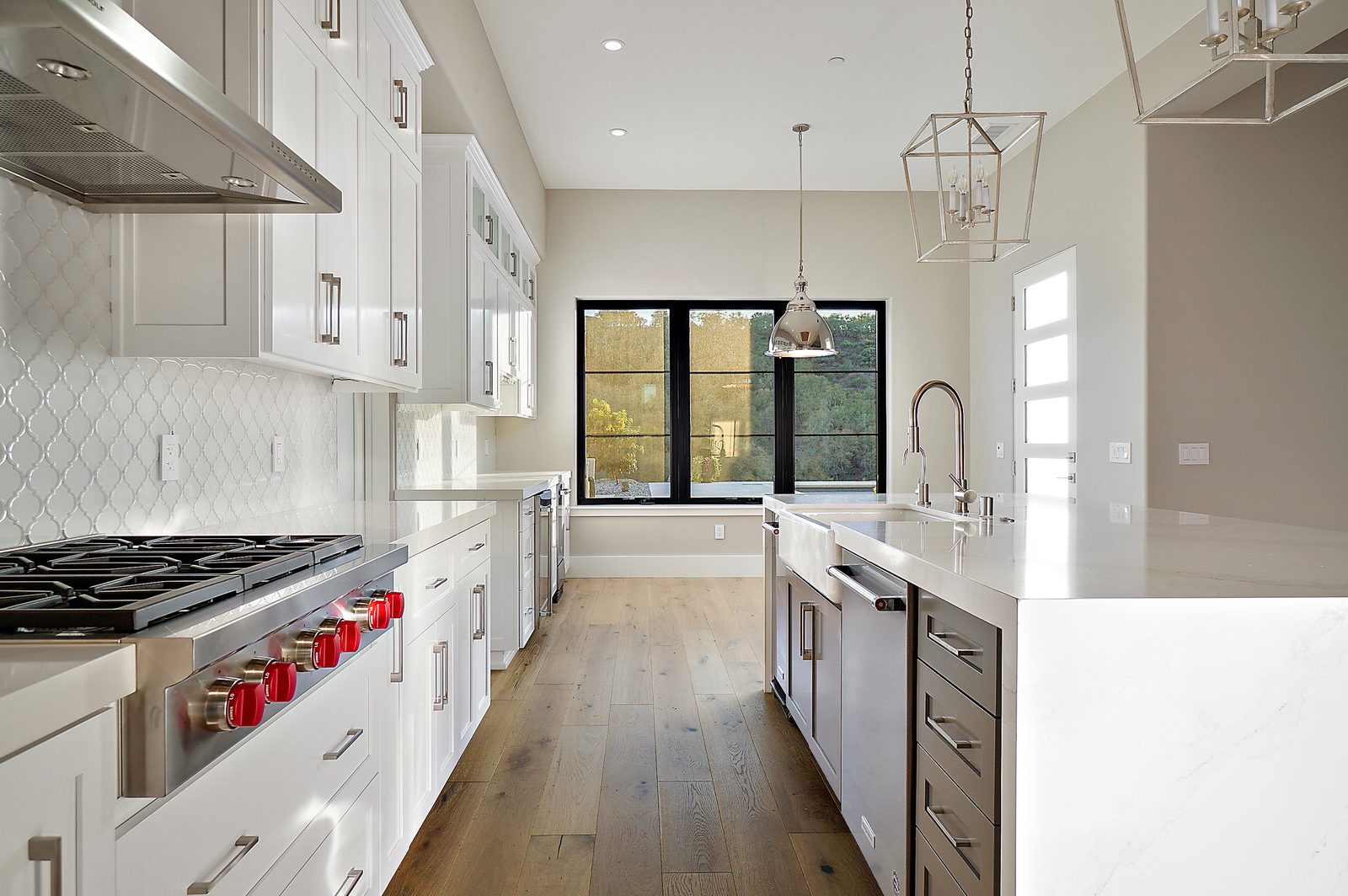
The County Code exempts “painting, papering, tiling, carpeting, cabinets, counter tops and similar finish work.” So a kitchen refresh that swaps cabinet boxes and counters in the same layout, paints, and lays new tile or flooring, with the sink, range and outlets staying where they are, is finish work.
The permit comes in as soon as the work goes behind the finishes:
- Plumbing. Moving the sink, adding a prep sink or a pot filler, or replacing concealed drain or water piping. The County treats replacing a defective concealed pipe as new work that needs a permit.
- Electrical. New circuits for appliances, added outlets on a new island, or new lighting. A kitchen remodel almost always touches these.
- Gas. A new or moved gas line for a range or cooktop is a gas system alteration.
- Ventilation. A new range hood ducted to the outside is generally treated as mechanical work.
- Walls. Opening the kitchen to the living room means cutting a wall, and often a beam sized by an engineer.
New and altered lighting in a remodel also has to meet California’s 2025 Building Energy Efficiency Standards, which is checked as part of the permit. Our kitchen remodel timeline shows where the permit falls in the order of work, and our kitchen remodeling page covers what we build.
4. Bathrooms
Same layout vs a new shower
A bathroom follows the same logic. New paint, a mirror, towel bars, a vanity top or new tile over sound walls are finish work. Under the County Code’s plumbing exemptions, stopping a leak, clearing a stoppage, and removing and resetting a toilet do not need a permit, as long as the repair does not replace or rearrange valves, pipes or fixtures.
That last condition is where most bathroom remodels cross the line. Rebuilding a shower usually means a new shower valve; moving the toilet, tub or vanity means moving drains and supplies; adding an exhaust fan or new lighting means wiring. Each of those needs a permit, and the permit’s inspection card lists the inspections that have to pass before the walls and tile close up.
Our bathroom remodel timeline walks through each step with the inspections in between, and our bathroom remodeling page shows the finished work.
5. Windows, doors, roofs and siding
The outside of the house
Windows
The County exempts replacement windows that do not remove the frame of the existing window, as long as the new windows meet the current energy code’s minimum U-value and the safety glazing rules for hazardous locations such as near doors, tubs and stairs. If the house was built under the wildfire building codes, the replacements also have to meet those rules, which the County describes as at least one tempered pane. Pulling out the frames, changing an opening’s size, or adding a window or door means altering the wall, and that needs a permit.
Roofs
A re-roof is exempt only in one case: all the old roofing comes off and new Class A asphalt shingles that meet the state cool roof requirements go on. Tile, metal, a layover on old shingles, new sheathing or structural repair, skylights and solar are outside that exemption. Skylights are on the County’s over-the-counter list.
Siding, stucco and awnings
Repairing or replacing exterior siding or cement plaster is a listed Express Permit type, so it needs a permit, but often a quick one. Small window awnings supported by the wall, within the County’s size limit, are exempt. In mapped fire hazard areas, new siding, vents and windows have to meet the wildfire rules in our fire hazard severity zone guide.
Two more layers can apply to exterior work even when no building permit is needed. On the coast, a coastal development permit or other land-use approval may be required; our coastal development permit guide explains when. And some communities have their own design standards or CC&Rs. Our exterior remodeling page covers the work itself.
6. Decks, fences, walls and sheds
The yard projects
- Decks. Exempt only if the deck serves a single-family home, stays within the County’s small area limit, is no more than 30 inches above grade at any point, is not attached to the house, and does not serve the required exit door. Most decks off a living room fail at least one of those tests. The County lists decks among its fast-track permits, which may be reviewed within ten working days when the submittal is complete.
- Fences. Solid fences up to six and a half feet tall are exempt from the building permit, and open wire fences up to eight feet are exempt in the Agriculture and Rural Lands categories. The County’s fencing and screening page adds that zoning sets height limits and setbacks, that communities may have their own standards, and that owners on a coastal wetland, bluff, beach or near a creek should contact Planning first.
- Retaining walls. Exempt up to four feet from the bottom of the footing to the top of the wall, unless the wall supports a surcharge such as a slope, driveway or building above it, or sits within three feet of a property line while retaining more than two feet of soil.
- Sheds and playhouses. The County’s FAQ says a storage shed under 120 square feet, with no utilities and under 12 feet tall, does not need a construction permit; larger sheds, or any with power or water, do. Sheds of any size must meet setbacks, and some areas add design review. Agricultural shade and hoop structures have their own rules in the County’s shade structure guide.
- Walkways, patios and grading. Sidewalks and driveways within 30 inches of grade are exempt from the building permit, but moving soil is a separate question. The County’s grading, septic and stormwater page says a grading permit is typically needed once a project moves more than 50 cubic yards of soil, and steeper sites can need more review.
Outdoor kitchens with gas, power or water lines need permits for those systems. Paso Robles Landscaping, our landscape design and installation company, plans and builds the yard side.
7. Water heaters, panels, HVAC and solar
Systems: quick permits, but still permits
Replacing equipment surprises many owners: a like-for-like water heater, furnace or panel swap still needs a permit, because it is a gas, mechanical or electrical installation regulated by the code. The County keeps these quick. Its Express Permits page lists the online permit types, and its FAQ names the over-the-counter and fast-track projects:
| Path | What it is | Typical projects named by the County |
|---|---|---|
| Express Permit (online) | Applied for and issued online through PermitSLO. Only California licensed contractors can use it, and only in the RMF, RR, RS and RSF residential zones. | Water heater replacement, furnace or AC replacement in the same location, main panel replacement up to 200 amps, water piping and drain repair, sewer lateral repair, lighting, switches and receptacles, siding and plaster repair, small solar systems. |
| Over the counter | Can be issued the same day the application is submitted, if the submittal is complete and fees are paid. | Electrical permits, skylights, water heaters. |
| Fast-track review | Smaller projects that may be reviewed within ten working days if the submittal is complete and initial fees are paid. | Decks, small additions, foundation replacement or repair, new garages and storage buildings. |
| Expedited renewable energy | Solar and EV charger permits that meet the County’s checklists; the County says applicants hear back within five business days. | Rooftop or ground-mounted solar, EV charging stations. |
| Plan review | Full plan check before the permit is issued. The County says permits can usually be issued within two months when plans are complete and questions are answered promptly. | Kitchens and baths with layout changes, wall removals, additions, second stories, conversions. |
From the County’s Express Permits, construction permit FAQ and renewable energy permit pages, October 2026. Times are the County’s stated targets, not promises.
Solar panels and EV chargers always need a building permit; the County’s renewable energy permit page explains the expedited checklist review. Emergencies are covered too: when equipment has to be replaced or repaired in an emergency, the County Code allows the work and requires the permit application by the next working business day.
The Express path is for licensed contractors only, which is one reason it matters who does the work. If you plan to pull permits yourself, read our owner-builder guide first.
8. How a remodel permit works
From application to final inspection
- Apply online. Since July 28, 2025 the County accepts construction permit applications only online through PermitSLO; the PermitSLO portal guides walk through each step. Permit records can be searched there too.
- Plans. The County’s FAQ says an owner or a draftsperson may prepare plans for single-family homes and alterations that are “conventional construction”; non-conventional parts need a California licensed architect or engineer.
- Time limits. Under Title 19, an application has 360 days to be issued, with written extensions possible. Once issued, a permit for a building of a thousand square feet or more is valid for three years, and smaller or miscellaneous work for one year, with extensions on request.
- No early start. The County is direct that no work should be done until the permit is actually issued, because the pre-issuance site visit can change the plans.
- Inspections. The permit comes with an inspection card listing each inspection and any tests. Inspections can be scheduled by phone or through PermitSLO for the next workday, and the approved plans and card have to be on site. For a home, the signed final inspection serves as the certificate of occupancy.
The age of the house adds two non-permit rules. For homes built before 1978, the EPA lead renovation rule requires certified renovators and lead-safe practices on painted surfaces. Asbestos has no cut-off year; our county air district explains when a survey is required before renovation. We plan testing during design so tear-out does not stop for lab results.
9. Work done without a permit
Unpermitted and as-built work
Older homes often come with an enclosed porch, a converted garage or a bathroom someone added without a permit. That matters when you remodel next to it, refinance or sell. The County handles it through an as-built permit, for work started or completed before a permit was issued, and its rules are tighter than for new work:
- An as-built application is valid for 90 days, and one that expires is referred to Code Enforcement. Extensions need the building official’s express permission.
- An issued as-built permit is also valid for 90 days.
- For grading done without a permit, the County’s grading, septic and stormwater page says an as-built grading permit can carry violation fees, and the graded area may need to be dug out for an engineer to evaluate.
Getting old work permitted usually means opening walls so the inspector can see framing, wiring and plumbing, and sometimes bringing it up to current code. If you are buying a house, checking the permit history against what is built is worth doing before you close.
It is also why we look at the permit record during our first walk-through (we confirm per project). When a remodel keeps growing to take in old unpermitted work and most of the house, it can be time to compare whole-home remodeling vs. new construction.
10. Inside city limits
Cities set their own lists
The incorporated cities enforce the same state codes, but each adopts its own local amendments, forms and exemption lists, and some differ from the County’s. The Paso Robles Building Division, City of San Luis Obispo Building & Safety and Atascadero Building Division each run their own counters, and they are the ones to ask before starting. Morro Bay, Pismo Beach, Grover Beach and Arroyo Grande have their own building divisions too. Our SLO County permits guide links each office.
A Paso Robles or San Luis Obispo mailing address does not always mean the city; the parcel decides which agency you are in.
11. Before you start
10 questions to answer before your remodel
- Is the house in a city, or in the unincorporated County?
- Will any plumbing, wiring, gas line or vent be moved, added or replaced?
- Will any wall, beam or post be cut, moved or removed?
- Are the windows a frame-in-place swap, or will the openings change?
- What roofing is going on, and is the old roof coming all the way off?
- Is the deck attached, high off the ground, or serving an exit door?
- Is the lot in the coastal zone, a fire hazard area or a community with its own standards?
- Was the house built before 1978, and has it been tested for asbestos?
- Does what is built today match the permits on file?
- Who will pull the permit: you as owner-builder, or a licensed contractor?
If you need drawings, Harrod Drafting & Design draws remodel layouts and permit sets, and we also build from plans by outside architects and designers.
How we help
Remodeling in SLO County with Harrod Built
- An honest read. Harrod Built is a family general contractor based in Paso Robles, CSLB #986950. We walk the house with you, sort the work into what needs a permit and what does not, and give a written estimate with the permit path. You can confirm our license on the state license lookup, and our guide to checking a contractor’s license shows what to look for.
- Permits handled. We prepare and submit the application, coordinate any engineer or energy work, schedule inspections and keep the card and plans on site until the final.
- No surprises in the walls. We plan for older-home conditions, test suspect materials early, and talk through how to handle old unpermitted work before it is uncovered.
- Design support. Harrod Drafting & Design, our drafting studio, draws layouts and permit sets for kitchens, baths, home additions and conversions.
See our whole-house remodels, kitchen remodeling, bathroom remodeling and interior remodeling pages, plus our San Luis Obispo County page. We work across San Luis Obispo, Monterey and Santa Barbara counties with general contracting, design-build and remodels projects; our process page explains how a job runs. For budgets, start with our remodel cost guide; if the house is going up, see our second-story guide; if a garage is becoming living space, see our garage conversion vs detached ADU guide and SLO County ADU guide. For energy rules, see the Title 24 overview.
Not sure if your remodel needs a permit? Tell us what you want to change. We can look at the house with you, sort out what needs a permit and what does not, and give you a written estimate with the permit path and schedule. Call 805-712-8993 or contact us.
Sources: County of San Luis Obispo Department of Planning & Building: County Code Title 19 (Building and Construction Ordinance), Section 19.02.020, including the work exempt from permit, ordinary repairs, emergency repairs, application and permit time limits and as-built rules (as amended through Ord. No. 3560, December 2025); frequently asked questions on construction permits; Express Permits for Small Repairs or Installs; Building & Construction section; grading, septic and stormwater page; renewable energy permit page; permit types page; fencing and screening page; shade structure guide; PermitSLO portal guides. Also the Contractors State License Board’s building permit page, the EPA’s lead renovation rule, the San Luis Obispo County Air Pollution Control District’s asbestos page, the California Energy Commission’s 2025 standards, and the Paso Robles, San Luis Obispo and Atascadero building pages. All checked October 22, 2026. This guide is general information, not legal or code advice. The County, or your city, has the final word on what a project needs; when in doubt, ask Planning & Building before work starts.


Do I need a permit to remodel a kitchen in San Luis Obispo County?
Usually. New cabinets, countertops, tile, flooring and paint are exempt as finish work in the unincorporated County, but moving the sink, adding circuits, running a gas line, adding a ducted hood or removing a wall needs a construction permit.
Do I need a permit to replace windows in SLO County?
Not always. The County Code exempts replacement windows that keep the existing frame and meet the current energy code and safety glazing rules, plus the wildfire-code rules if the house was built to them. Removing frames or changing openings needs a permit.
Does a new roof need a permit in unincorporated SLO County?
Only one kind of re-roof is exempt: a full tear-off replaced with Class A asphalt shingles that meet the state cool roof requirements. Other roofing types, layovers and structural repairs need a permit.
Do I need a permit to replace a water heater in SLO County?
Yes. A water heater replacement is regulated plumbing and gas or electrical work. The County keeps it quick: licensed contractors can use an online Express Permit in residential zones, and water heater permits can be issued over the counter.
What happens if remodel work was done without a permit?
The County handles it with an as-built permit. As-built applications are valid for 90 days and expired ones are referred to Code Enforcement. Inspectors may need walls opened to see the work, and it may need to be brought up to code.
Do cities like Paso Robles or San Luis Obispo follow the same rules?
Cities enforce the same state codes but have their own building departments, local amendments and exemption lists. Check with the city when the parcel is inside city limits.
Planning guides
Budget and planning guides
SLO County building permits: city vs County
Which counter reviews your project, based on the address, and how PermitSLO works.
Kitchen remodel timeline
The order of work on a kitchen remodel, from design and the permit to the final inspection.
How long a bathroom remodel takes
Every step from tear-out to shower glass, with the permits and inspections in between.
Home remodel cost in Paso Robles & SLO County
Kitchens, baths, whole-home remodels and additions: the cost drivers we see.
Adding a second story
Feasibility, structure and permits when a house goes up instead of out.
Garage conversion or a detached ADU?
Two ways to add living space, and how the permit paths differ.
Coastal development permits in SLO County
When a coastal lot needs a coastal permit on top of the building permit.
Owner-builder vs a licensed contractor
What the owner-builder exemption allows, and the duties that come with it.
How to check a contractor’s license
Confirm the license, bond and workers’ comp before you sign.
Title 24 energy code
The state energy rules that apply to new lighting, windows and equipment.
Building or remodeling in Cambria
Water service and wait lists first, then small-lot size limits, Monterey pines, coastal permits and fire.
Remodeling an older home
Lead paint, asbestos testing, old wiring and pipes, foundations and the code upgrades a permit can bring.
Room additions in SLO County
Where a single-story addition fits: setbacks, septic and wells, slope, fire and energy rules, and permits.
ADU rules in the City of Paso Robles
Permit paths, size, setback, parking and design rules, junior ADUs, pre-approved plans and the City checklist.
Building a custom home in Atascadero
City permits and intake, the native tree ordinance, tree protection plans and the hillside standards.
Building or remodeling in the City of San Luis Obispo
When architectural review applies, hillside and creek rules, historic review and the City permit path.
Building a house in Nipomo
County permits, NCSD will-serve letters, Nipomo Mesa water offsets, sewer or septic and drainage.
Start your project
Planning a remodel in San Luis Obispo County? Tell us about your project.
A few details help us call you back with useful answers about budget, schedule and permits.
805.712.8993michael@harrodbuilt.com
1345 Riverside Ave, Paso Robles, CA 93446
CSLB License #986950
